


币圈热门事件追踪,KOL和大V的绯闻,一起来吃币圈名人的大瓜😝
Topic Background




SOL I don't understand
Crypto Newbie
03-20 19:35
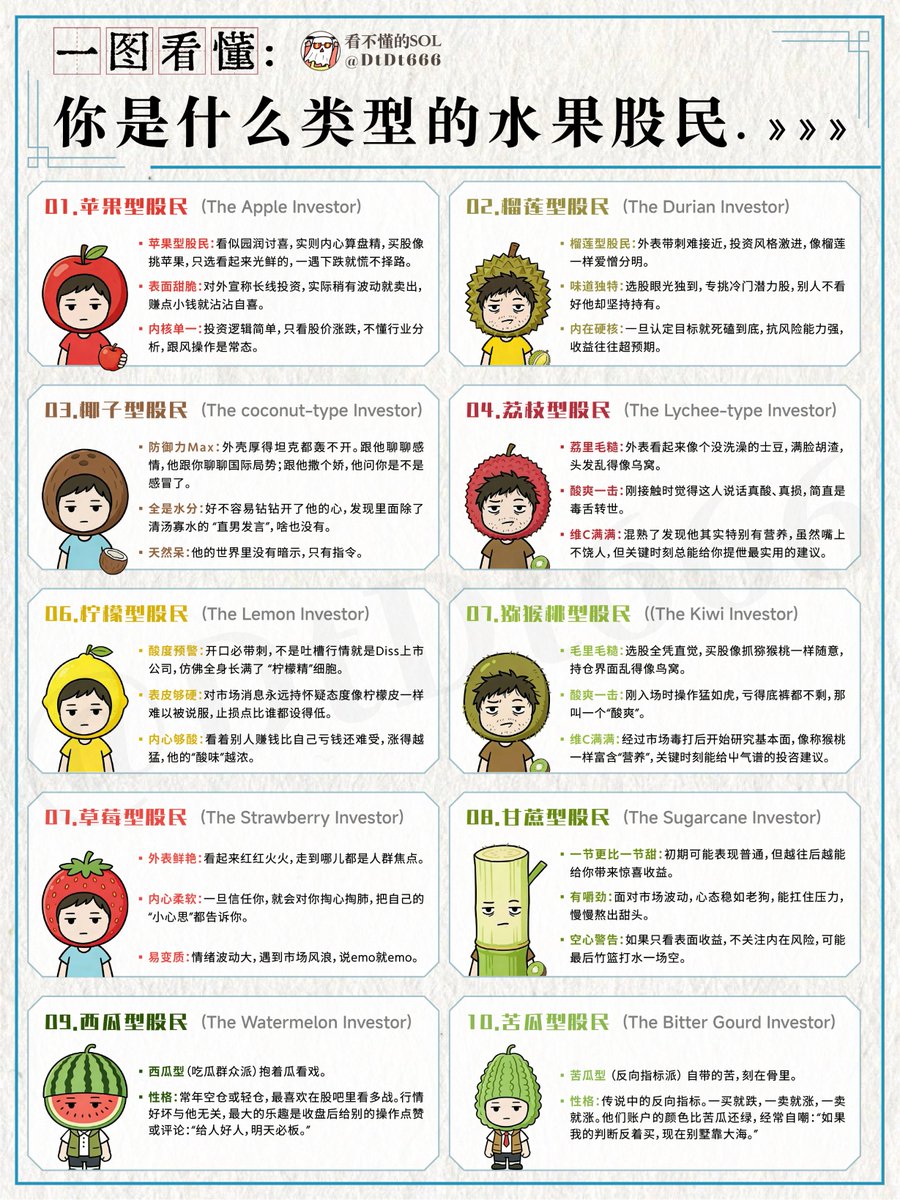
What type of "fruit" stock investor are you? Peeling back the fruit reveals the essence of your trading.
We're always staying up late analyzing candlestick charts and financial reports, trying to understand the market's temperament, but rarely are we willing to stop and take a good look at ourselves in the mirror.
Our personality, weaknesses, and cognitive boundaries are all hidden within this fruit peel.
**Apple Type:** Seemingly round and pleasing, but actually shrewd and calculating. They talk about long-term investing, but are quick to cash in at the first sign of volatility. They only look at the surface of stocks, don't understand industry logic, and following the crowd is their norm.
**Durian Type:** Prickly and unapproachable on the outside, with an aggressive investment style and strong likes and dislikes. They have a unique eye for stock selection, specializing in undervalued high-potential stocks. Once they've identified a stock, they stick with it relentlessly. They have extremely high risk tolerance, and their returns often exceed expectations.
**Coconut Type:** Hard as a tank, with maximum defense, but hollow inside. They talk fluently about macroeconomics, but when it comes to actual investment, they only offer bland, straightforward pronouncements. Their world consists only of commands, not nuances.
Lychee Type: Rough on the outside, seemingly unkempt; initially, their bluntness can be harsh, but once you get to know them, you'll discover they always offer the most practical advice in crucial moments—a "nutritious" force hidden beneath their rough shell.
Lemon Type: Overflowing with "lemon acid," they feel worse seeing others profit than losing themselves; perpetually skeptical of the market, they criticize everyone's opinions, and the more the market rises, the stronger their "sourness."
Kiwi Type: Stock picking relies entirely on intuition; their initial entries are aggressive, often resulting in massive losses; only after being battered by the market do they begin to study fundamentals, slowly developing "nutrition" and becoming mature investors capable of offering sound advice.
Strawberry Type: Outwardly glamorous, always the center of attention, but inwardly soft and fragile; once they trust someone, they open their heart completely; their emotions fluctuate wildly, easily becoming emo at the slightest adversity—as perishable as a strawberry.
Sugarcane Type: Initially mediocre, but increasingly surprising you over time; maintains a calm and collected mindset amidst market fluctuations, enduring pressure and slowly reaping the rewards; however, focuses only on surface gains and ignores risks, potentially ending up with nothing.
Watermelon Type: The typical bystander, perpetually holding no or minimal positions, loves browsing stock forums, liking others' posts, indifferent to market conditions; their greatest pleasure is "giving a good vote, and tomorrow's market will surely be a limit up."
Bitter Gourd Type: A natural contrarian indicator; buy when it falls, sell when it rises, their account is greener than a bitter gourd, always joking, "If I had bought the opposite way, I'd be living in a villa by the sea now."
The essence of trading is never about beating the market, but about mastering yourself:
Apple-type traders need to learn to withstand volatility;
Durian-type traders need to control the boundaries of their aggressiveness;
Coconut-type traders need to cultivate inner understanding;
Lemon-type traders need to let go of the sourness of envy;
Strawberry-type traders need to stabilize their emotional fluctuations;
Sugarcane-type traders need to see the hidden reefs of risk;
Watermelon-type traders need to learn to put their knowledge into practice;
Bitter gourd-type traders need to learn to use their "intuition" in reverse.
Ultimately, no "fruit" is born to make money, and no one is destined to be harvested by the market.
The market doesn't favor any particular personality type; it only rewards those who understand themselves, adapt their strategies, and adhere to their bottom line.
Instead of chasing hot trends today and switching tracks tomorrow, it's better to first understand: What kind of fruit are you? What kind of soil can your roots take hold in?


49

471

46


Xinguang, the salesperson
Crypto Newbie
03-16 21:43
When things are quiet during a bear market, enjoy some gossip!

33
379
33
TVBee
Crypto Newbie
03-15 00:39
These people must have read *Romance of the Three Kingdoms*!
Since the death of Khamenei Sr. on February 28th, Khamenei Sr. has not made a public appearance.
Even after being elected Supreme Leader on March 8th, he has not appeared or spoken.
There have been rumors of his disfigurement, a broken leg, blindness, mental breakdown… and even a body double…
And today, the rumors are that he's dead…
But this shouldn't be taken lightly. It's like in *Romance of the Three Kingdoms*, when Zhuge Liang launched his final Northern Expedition, Sima Yi knew Zhuge Liang had less supplies, so he refused to engage, hoping to wear Zhuge Liang down. So Zhuge Liang sent him women's clothing, hoping to provoke him into battle.
The Iranian side also knows that Trump will visit China in late March or early April, and there are midterm elections later in the year, so they hope for a quick victory and want to drag things out. The other side, naturally, wants to force Khamenei Sr. to appear, or at least expose his team's true colors.
They've all read "Romance of the Three Kingdoms"!

36
356
45

Lao Mo
Crypto Newbie
03-12 11:44
Hey guys, back to gossiping again, hahaha.
I heard that Elizabeth, after her charity fraud scandal, was completely ruined, but now she's all repackaged and become a social media influencer on Xiaohongshu.
This society is so surreal. Everyone be careful not to get scammed by her. If she can do something as despicable as charity fraud, what wouldn't she dare to do?
20
366
20

Haotian | CryptoInsight
Crypto Newbie
03-12 02:31
Meta's acquisition of @moltbook, while not disclosing the amount, has generated considerable controversy within the industry. The biggest question remains: why would Mark Zuckerberg willingly become the white knight of Vibe Coding, a clearly outdated and quickly discredited platform?
Think about it: would Zuckerberg really spend money on a riddled-with-problems codebase? By clarifying the underlying logic, we can understand what Meta was actually buying.
1) On the surface, it appears to be a performance art piece using AI, but in reality, it's a validation of the A2A business logic.
Moltbook was indeed incredibly successful upon launch, processing millions of data points at breakneck speed, even prompting @karpathy to exclaim, "Science fiction has become reality!" However, the bubble quickly burst, revealing fake agents issuing tokens, rampant security vulnerabilities, and ultimately turning it into a "large-scale human performance art platform" where real people are disguised.
Seems like a joke, right? But here's the key point! This chaotic performance art precisely demonstrates an extremely hardcore market demand: ordinary users have incredibly high expectations for Agentic Social. They are not only ready, but even eager to interact and speculate within an AI-driven network. Moltbook may be a bit rough around the edges, but it undeniably successfully implemented the super IP and cold start of the A2A (Agent to Agent) concept.
2) This is a typical Silicon Valley-style "talent acquisition" strategic positioning.
For Zuckerberg, the quality of Moltbook's code is irrelevant. In Silicon Valley, the real purpose of such acquisitions is the team. The team behind Moltbook, led by @MattPRD, is among the world's first to truly manage "high-concurrency, high-emotional-load stress tests on AI social platforms."
After all, the practical lessons learned from navigating this kind of wild, real-world traffic are invaluable assets that large companies can't acquire through countless closed-door product simulations. Meta's investment sends a very strong signal: the disruptive new track of A2A social networking is viable, and the pioneers of internet social networking have already entered the fray.
3) A deeper underlying theme is the "defensive positioning" of social media giants after H2H growth has peaked.
Let's shift our focus to the future. The fundamental logic of social networks is inevitably shifting from H2H (people-to-people) to A2A. The traditional social networking boom has long been exhausted by Meta and Tencent, leaving everyone stagnant and struggling.
Once H2H peaks, new players will inevitably emerge, using the power of Agentic Social to challenge the old kings.
Meta's acquisition of Moltbook is essentially a "defensive positioning." The subtext is: no matter how flawed you are now, I'm securing this position, ensuring you or your imitators won't have the chance to become the next TikTok.
This is where things get interesting: how exactly will A2A change the ecosystem?
In the past, social interaction involved you personally posting, liking, and following trends. But in the A2A framework, nodes become "digital avatars representing you" interacting with "other people's agents."
It understands your preferences, sifting through massive amounts of information for you, negotiating for you, and even arranging dates for you. Simply put, while commercial advertising used to rely on guessing what you clicked on, future commerce will have your agents directly using "intent data" to precisely match resources across the entire network. This is a completely new dimension of dimensional reduction.
Finally, let's talk about Crypto.
Moltbook inadvertently revealed a highly sensitive and vast narrative: AI x Crypto. At the time, the platform not only had agent chat but also a bunch of agents randomly issuing cryptocurrencies. On the surface, it seemed like a chaotic scam, but at its core, it directly addressed the core pain point of A2A social interaction: machine-to-machine interaction naturally requires a native settlement layer and identity verification layer.
With this acquisition, Meta will most likely divest its crypto-related components. $Molt, the MEME coin used as a sentiment indicator, may just be experiencing a brief period of frenzied activity.
However, for the crypto industry, this is undoubtedly a huge positive development: as the Web2 social media giant begins to invest in and explore the A2A (Agent-to-Agent) model, the real battle is just beginning for blockchain infrastructure that can provide agents with permissionless payments, incentives, and verification.
That's all.
45
313
46

Sponge Evolution Theory
Crypto Newbie
03-10 17:25
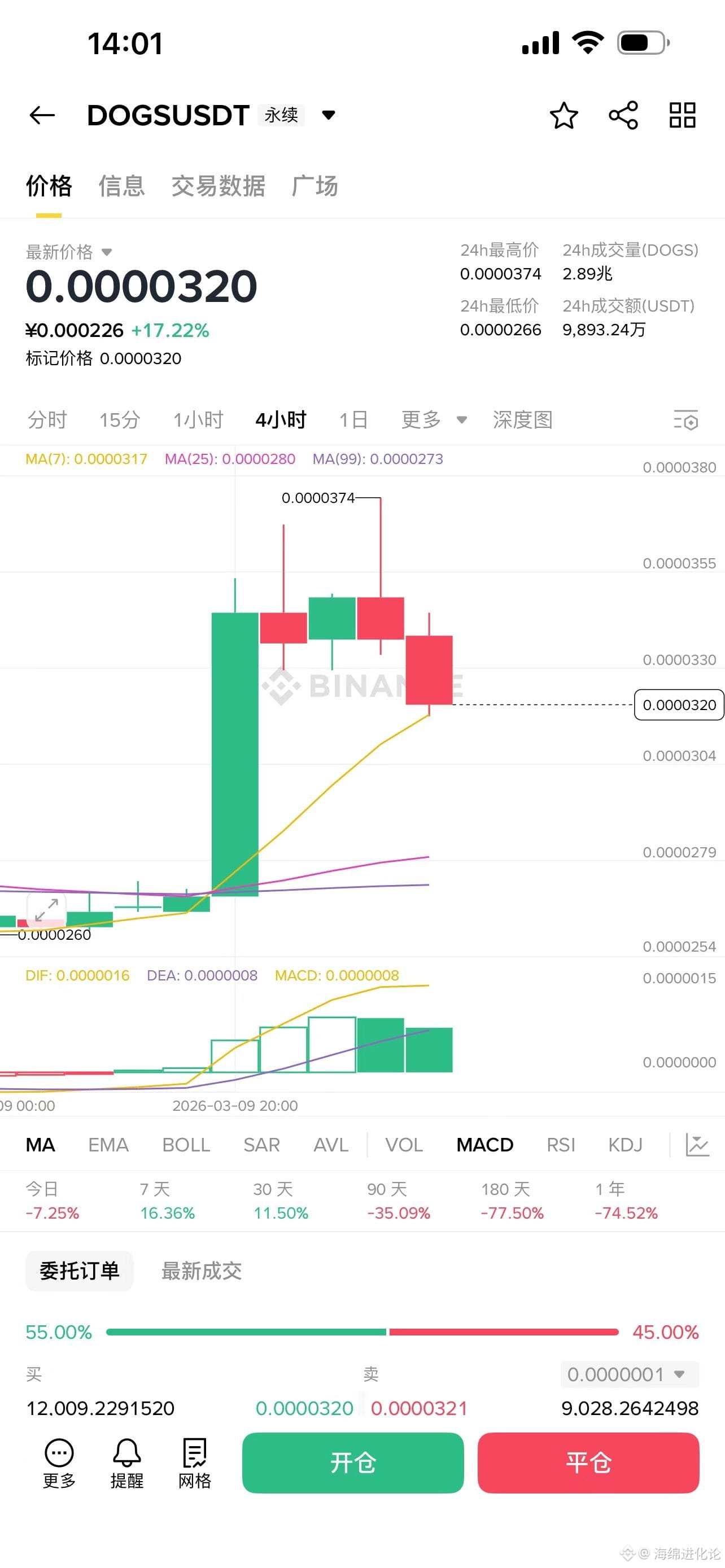
DOGS (Dogs) is buying, causing a strong price surge.
It's been fluctuating between 321, 322, and 333 for a long time.
It's about time for a clear direction; it will either go up or down.
This coin is not recommended for entry.
However, I'm bullish. I'll just observe from the sidelines this time.
#Dogs
40
377
30


The golden rabbit with amazing powers ☯️🍊
Crypto Newbie
03-09 10:53
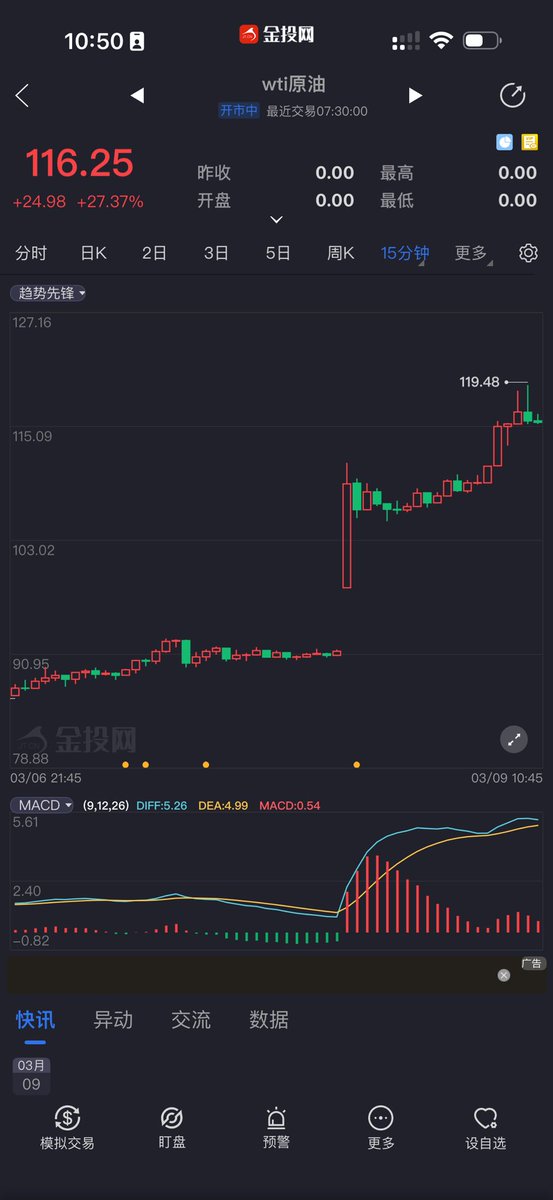
I filled up my gas tank on Saturday, saving about 20 yuan.
Checking gold prices today, I'm considering buying more.
I'm hesitant to enter the crude oil market; I'll just observe. I've already bought in, but I can't get out.
I saw a lot of experts on X (a Chinese investment platform) specializing in commodities. Someone suggested buying when it was at $72, and after just a few days, it's almost doubled.
I'm a 90s kid, and this is the first time I've seen this kind of market movement. I'm a little excited, and it feels like witnessing history.
However, the only commodity I dare to participate in is gold. Gold not only serves as a safe haven but is also a good hedge against inflation. I'll continue buying. 🥰
36
391
30

Successors of socialism
Crypto Newbie
03-03 02:14
I was already in bed, but then I got kept up by news about the Iran war and couldn't sleep. I sincerely hope for world peace!
Now, thinking about how cruel war is, what's a little money loss?
Am I the only one watching this bear market? I really want to know what everyone else is doing?
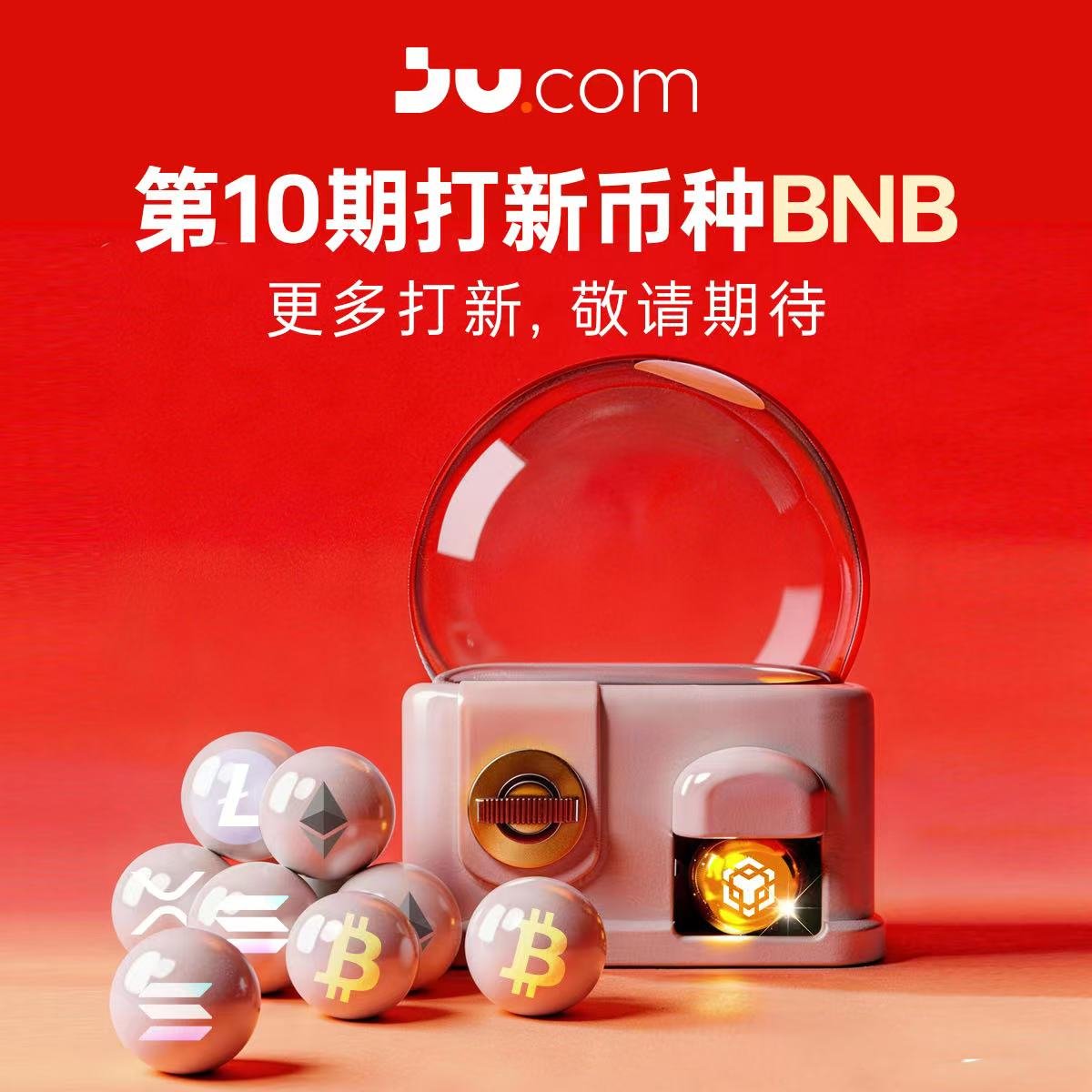
But recently I saw they've been giving away 10 rounds of new token offerings, and JU coin has gone up. Those who participated in each round consistently made around 3% profit. It's rare to get such low-risk benefits in a bear market.
The last BNB new token offering at an 80% discount starts tomorrow at 4 PM. It supports USDT/BTC/ETH/SOL/BNB/JU subscriptions. Instant access upon receipt, no lock-up period, and you can even win gold bars and an iPhone 17! Is it really that amazing? I want to try it too.
#Jucom #NewTokenOffer #Launchpad #BTC #ETH #SOL #BNB
30
471
42