Topic Background


FinanceRun
Crypto Newbie
3h ago
Fidelity Sends Letter to SEC: Tokenized Asset Regulation Should Not Be "One Token, One Rule," Differentiated Rules and Regulatory Models Needed
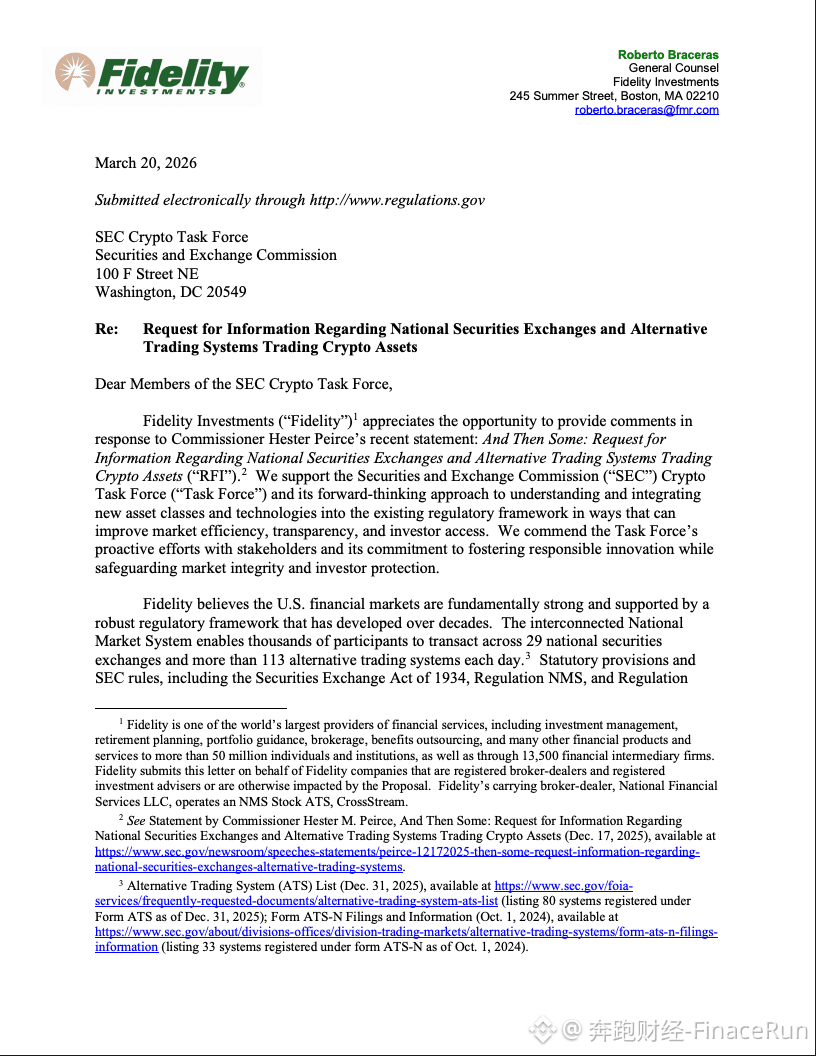
On March 22, Fidelity Investments, a US asset management company, sent a letter to the US Securities and Exchange Commission (SEC), responding to the SEC's earlier public comment period.
In the letter, Fidelity Investments called on the SEC to further refine its regulatory framework, primarily addressing matters related to brokers offering, custodian, and trading crypto assets on alternative trading systems (ATS).
The letter emphasized that developing a comprehensive regulatory framework and clear rules for trading tokenized securities is "crucial," including rules governing the trading of tokenized securities issued by third parties.
The letter pointed out that tokenized instruments have different issuance structures, legal attributes, and valuation models. For example, tokenized real-world assets (RWAs) encompass entirely different asset classes such as stocks, real estate, bonds, or private credit.
Fidelity further explains that tokenization models differ significantly in structure and the rights granted to holders. Some models allow indirect access to underlying securities through security interests, while others restrict participation to qualified contract investors based on security swaps.
This structural difference means the tokenization market is already "layered," requiring regulatory oversight that avoids a one-size-fits-all approach. Differentiated rules must be developed for different models; otherwise, compliance is impossible.
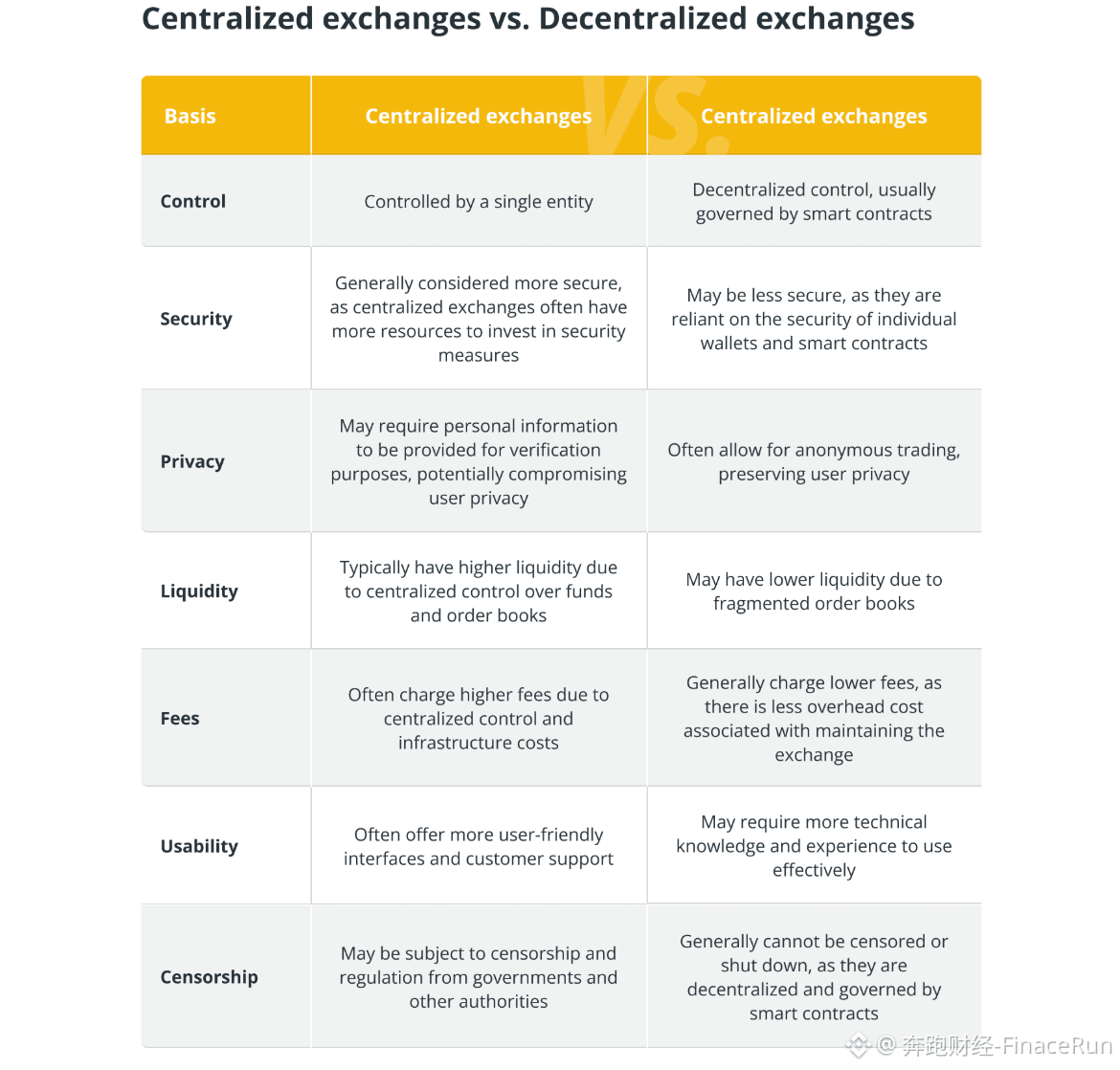
Furthermore, because DeFi financial trading platforms lack a central authority and cannot generate detailed financial reports as required by the SEC, Fidelity urges the SEC to bridge the regulatory gap between CeFi and DeFi trading systems and consider how they should evolve and coexist.
In response, Fidelity recommends that the SEC issue guidance allowing brokers to utilize distributed ledger technology for alternative trading systems and other record-keeping, aiming to alleviate unnecessary financial reporting burdens for decentralized systems by modifying reporting requirements.
In summary, Fidelity's letter reveals that some RWAs are merely digital shells of traditional securities, while others have become high-barrier contract derivatives, clearly inconsistent with a unified market regulatory logic.
Fidelity's demands are straightforward: either break down the rules into smaller, more manageable sections, or stifle innovation in the industry. The SEC's response will determine how fast CeFi can grow and how far the DeFi world can go.
#TokenizedSecurities


46

336

30


benmo.eth
Crypto Newbie
4h ago
Coinbase has also launched US stock trading, further blurring the lines between old and new in crypto finance. While Robinhood continues to dominate the crypto market, Coinbase is now turning the tables and encroaching on the stock market. This US stock listing, initially appearing in the Asian derivatives market, is accompanied by an unprecedented trading event from Coinbase: [details omitted]. Simultaneously, USDC margin trading offers a 3.5% APY.
![Coinbase has also launched US stock trading, further blurring the lines between old and new in crypto finance. While Robinhood continues to dominate the crypto market, Coinbase is now turning the tables and encroaching on the stock market. This US stock listing, initially appearing in the Asian derivatives market, is accompanied by an unprecedented trading event from Coinbase: [details omitted]. Simultaneously, USDC margin trading offers a 3.5% APY.](http://img.528btc.com.cn/pro/2026-03-23/img/17742440564746c14b6a9bx5c75a3a947h4xb42hb23cj.jpg)
30
449
20

Mars Finance
Crypto Newbie
8h ago
🔔10x Research: Bitcoin Falls Below $69,000, Derivatives Market Turns Defensive, Downside Risks Intensify
According to Mars Finance, 10x Research published an analysis on its X platform pointing out that Bitcoin has fallen below the key price level of $69,000, indicating a significant shift in market structure and substantial signs of trader position adjustments.
Futures traders have significantly closed out long positions, with funding rates turning deeply negative. Simultaneously, options funding flows have clearly shifted towards downside protection, short-term volatility has rebounded to the mid-range, and skewness remains negative, reflecting the market's continued demand for hedging against downside risks. 10x Research adds that the market is no longer trading around the expectation of breaking through $75,000. Faster-reacting traders in the derivatives market have already adjusted their positions, and the overall market is preparing for uncertainty and even greater volatility.
On a macro level, the market is beginning to price in interest rate hike expectations, while the Federal Reserve is still releasing guidance on rate cuts. This divergence is unlikely to be sustainable in the long term. If the oil price shock further evolves into a growth shock, risk assets may come under pressure. The key price range has entered a sensitive phase; if it is breached, the downward trend may accelerate.

22
457
26

The little sheep mining
Crypto Newbie
1d ago
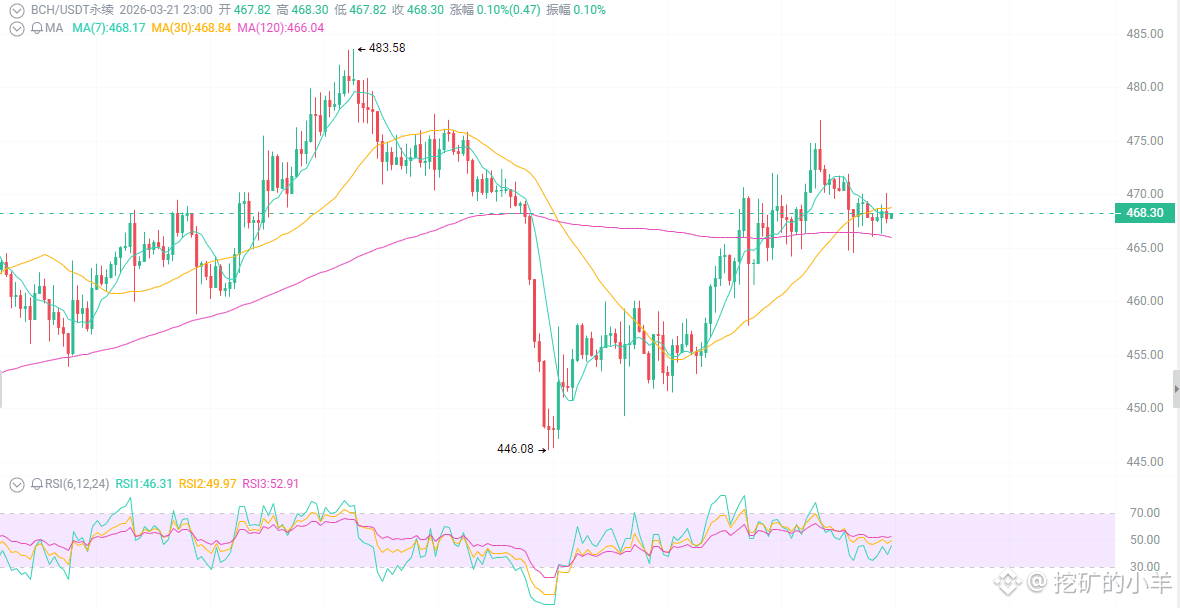
Would you dare chase $BCH at $470?
The SEC and CFTC just gave it "commodity" status, opening the door to ETFs and derivatives. The OBV indicator shows a higher low, indicating someone is secretly accumulating shares—but what about the price? At $470, it's like someone with their throat stuck, unable to go up or down. Investors are in an uproar: can this established fork coin ever recover?
First, look at the surface: it's risen, but not fully.
In the past 24 hours, BCH rose 1.7%, climbing from $458 to $470. But don't get too excited—the 30-minute chart tells you it was immediately suppressed at $470. Trading volume is 32.84% lower than the previous day, and the Bollinger Bands are extremely narrow, like a compressed spring—it will either bounce back or break.
First thing: regulators have recognized it, and institutions are coming.
The SEC and CFTC, two of the toughest regulatory bodies in the US, have officially classified BCH as a "commodity." What does this mean? It means that ETFs, derivatives, and institutional funds—things previously unthinkable—can now be done openly.
Secondly: Someone is secretly accumulating shares.
The OBV indicator has reached a higher low, which translates to: someone is quietly buying at lower prices.
Thirdly: Technical indicators are fighting, but the outcome is imminent.
A three-white-soldiers pattern has appeared, the RSI has broken through the 50 midline, and the price is above the Bollinger Band middle line—all signs that the bulls are shouting "I'm going to push!" But on the other hand, the EMA5 has crossed below the EMA10, and the price is still below the EMA24 and EMA52, indicating that the bears are saying "Come down!"
The key levels are 470 and 464; this is the final battle between bulls and bears.
On one side, regulators have recognized it, funds are accumulating, and the three-white-soldiers pattern is pushing upwards.
On the other side, trading volume is shrinking, moving averages are providing resistance, and the $500 level is a strong resistance.
If you are a short-term trader: If there's a breakout above 470 with high volume, consider a small long position with a target of 476.95 and a second target of 480. If it breaks below 464, aggressive traders can short with a target of 457, and then further down to 450. Don't be greedy, don't hold on, and get out if you choose the wrong direction.
If you are a long-term trader: Wait for it to fall to the 440-450 range and accumulate positions in batches. The EMA120 is still providing support below, and the very long-term trend hasn't broken.
37
412
46

Binance (Chinese)
Binance
03-21 16:56
🎓 Binance Academy Explains Binance AI Proxy Skills: Alpha, Derivatives, Margin Trading, and Assets
These 4 Binance AI Proxy skills help you enhance your automated trading, market analysis, and asset management experience. By combining these skills, the AI proxy can execute complex, multi-stage strategies! 🤖
Understand in just 10 minutes, try it out! 👇

24
400
31


Wu Blockchain
Crypto Newbie
03-20 17:11
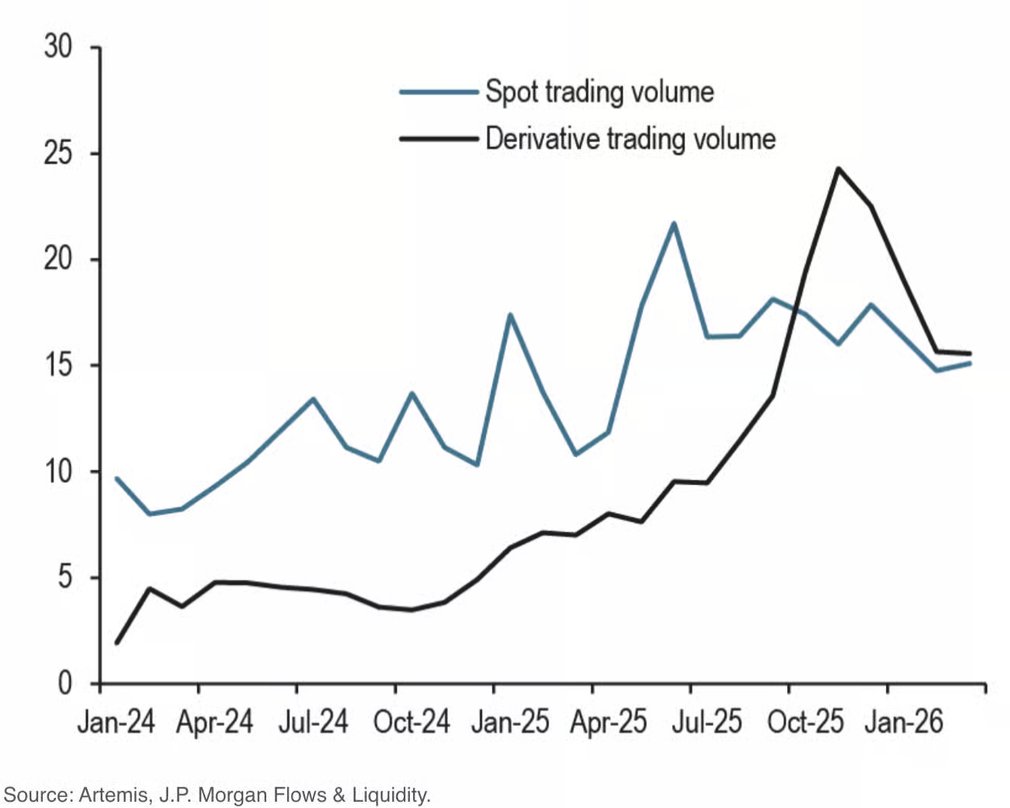
Coinbase has launched perpetual stock futures for users outside the United States, offering 24/7 leveraged synthetic investments in U.S. stocks (such as Apple, Nvidia, and Tesla) and ETFs (such as SPY and QQQ) with leverage ratios of up to 10x to 20x, settled in USDC, and plans to expand its global derivatives business.
30
379
26


Mars Finance
Crypto Newbie
03-18 22:19
🔔A whale deposits $5.01 million USDC into HyperLiquid after a year of inactivity and shorts crude oil
According to Mars Finance, monitoring by onchain data analysis platform Onchain Lens, a whale address, after a year of inactivity, deposited $5.01 million USDC into the decentralized derivatives trading platform HyperLiquid within nearly two hours and opened a short position in CL tokens with 2x leverage.

23
483
48

![Breaking news: ⚡ S&P Dow Jones Indices has authorized Trade[XYZ] to launch S&P 500 perpetual derivative contracts on the Hyperliquid platform.](http://img.528btc.com.cn/pro/2026-03-19/img/17738566629886h8h399955703j2a3c22j7a42c95c6a2.jpg)