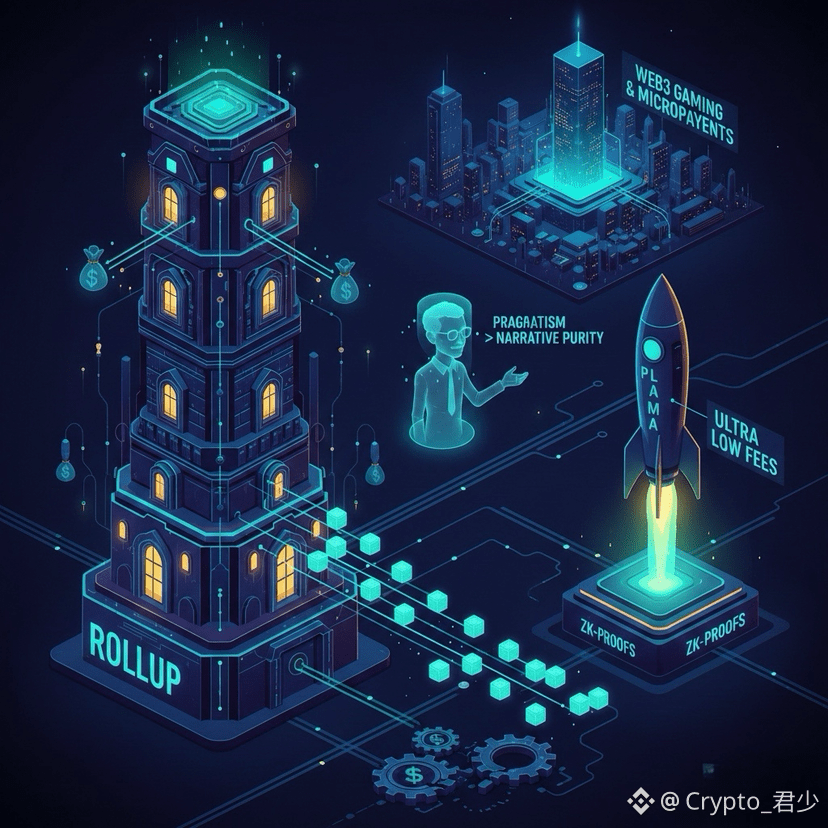
Recent developments in Plasma have indeed prompted many veteran users to call it a "renaissance."
It was initially thought that it had been relegated to the dustbin of history by Rollups, but with Vitalik bringing Plasma back to the forefront, especially with the emergence of optimizations for EVM scalability, the tide has turned.
My first impression is that pragmatism has triumphed over narrative perfectionism. Previously, Plasma's biggest pain point was its incredibly user-unfriendly "exit mechanism," requiring users to become coding geniuses to salvage assets if data became unavailable. However, the current technological approach is clearly smarter, addressing data availability challenges by borrowing from ZK proofs, allowing Plasma to maintain extremely high throughput while no longer acting as an "island" vulnerable to disconnection.
From a news perspective, this seems more like a "precise poverty alleviation" effort to reduce L2 costs. While Rollups are already powerful, for small payments or game interactions with thousands of transactions per second and extremely low individual value, DA costs remain a burden. Plasma's "extremely cost-effective" model of keeping data off-chain perfectly fills this niche.
Personal opinion: I don't believe Plasma will replace Rollup, but it's becoming a "special forces" tool in specific scenarios. It's no longer that cumbersome old relic, but has evolved into a lighter and more secure extension component. If you're still looking at it with outdated perspectives, you might miss the new opportunities brought about by this wave of underlying architecture rethinking.
#plasma $XPL @Plasma