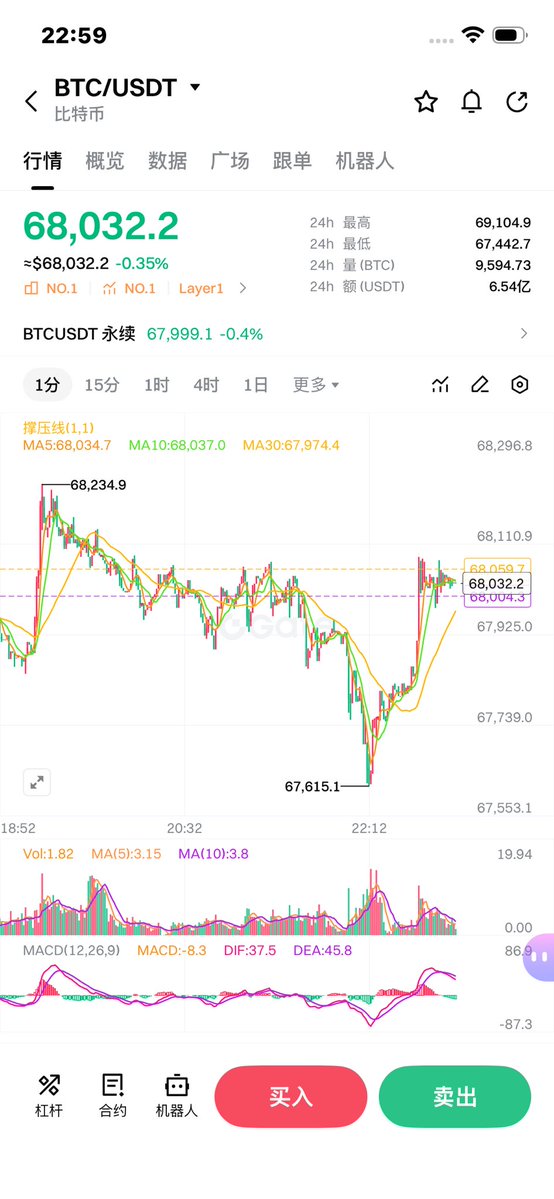
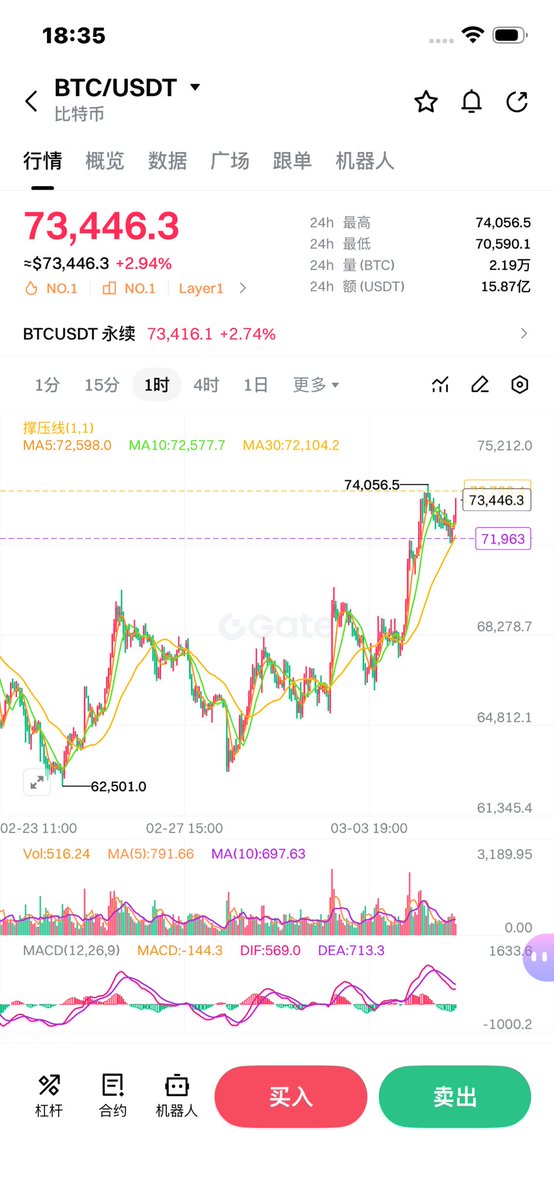
After much back and forth, the price has returned to around 70,000 points!
Although the daily chart shows an eight-day winning streak, I've consistently emphasized that this type of consecutive positive days has significant flaws. Firstly, the gains are insufficient; secondly, it's a series of positive days in a weak market, not a strong bull market. In a weak bear market, it can only be defined as a rebound!
I'm also very wary of reversal signals, especially when the positive candlesticks turn negative. In fact, this has been the pattern for the past month or so: whenever a consecutive positive day ends with a negative candlestick, the trend is disrupted, not as you might expect (a bear trap or a build-up of momentum for another surge). Historical results have proven that in a weak market, the end of a rebound and the termination of the positive candlesticks often lead to a continued decline. We can assume it won't break the bottom, but you must accept the volatility in a weak market. This is the rule, and the ironclad rule of my technical analysis!
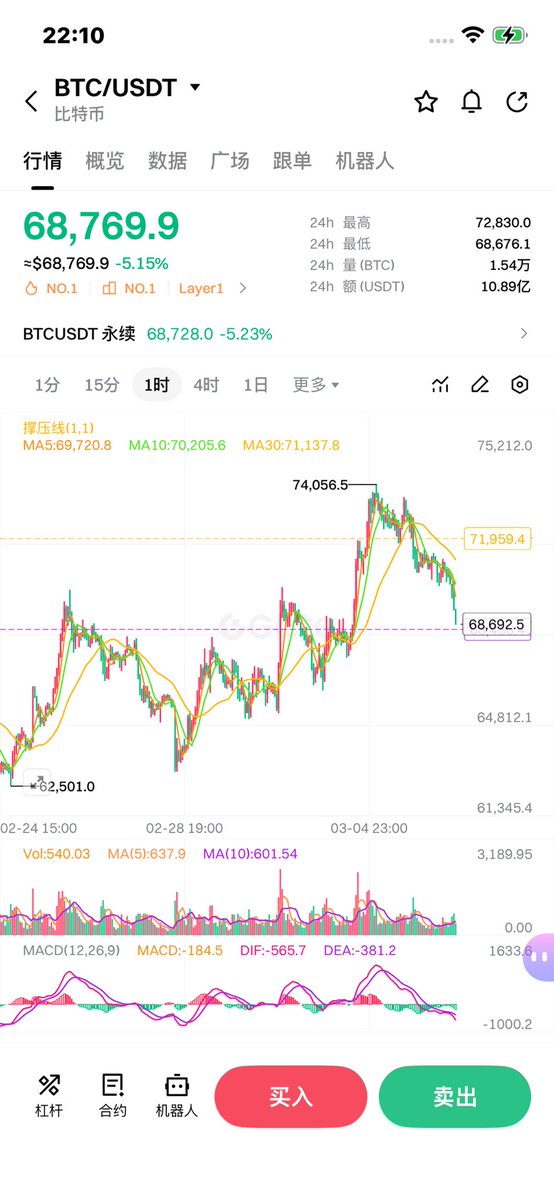
Yesterday's decline marked the return of 5000 points from the previous two days' gains, resulting in a series of consecutive negative days on the daily chart. Looking ahead, I believe a period of consolidation is more likely. Even if a breakout occurs, it's not expected to happen this week. Firstly, the numerous doji or small positive candlesticks during the previous consecutive positive days suggest a second correction after the price pullback, with the expected consolidation around 70000 points.
Yesterday's daily chart showed weakness, automatically breaking below 73000 without any significant bullish counterattack. Even in the early morning, the price only reached 72000 before encountering further resistance and declining again. Today's main theme is open to both long and short positions, but the primary focus is on a bearish outlook. The highest rebound this morning reached 71500 before the decline began. If there's another rebound, this level is expected to be broken. For a more conservative approach, I believe a decline is likely around 73000, which acts as resistance on the daily chart and is likely to be a support/resistance level for the previous consecutive positive days. Opportunities may be rare, but they are not impossible.
The upward position is also easy to judge. Just look around the resistance point that was touched multiple times in the previous period and then fell, and at the key point where the acceleration will come after the breakthrough. That's right, it's the 68500-69000 area. I'm sure you and I have the same expectation. So, without further ado, let's wait for the opportunity to get on board!

Price Converter

- Crypto
- Fiat

USDUnited States Dollar


CNYChinese Yuan

JPYJapanese Yen

HKDHong Kong Dollar

THBThai Baht

GBPBritish Pound

EUREuro

AUDAustralian Dollar

TWDNew Taiwan Dollar

KRWSouth Korean Won

PHPPhilippine Peso

AEDUAE Dirham

CADCanadian Dollar

MYRMalaysian Ringgit

MOPMacanese Pataca

NZDNew Zealand Dollar

CHFSwiss Franc

CZKCzech Koruna

DKKDanish Krone

IDRIndonesian Rupiah

LKRSri Lankan Rupee

NOKNorwegian Krone

QARQatari Riyal

RUBRussian Ruble

SGDSingapore Dollar

SEKSwedish Krona

VNDVietnamese Dong

ZARSouth African Rand
No more data