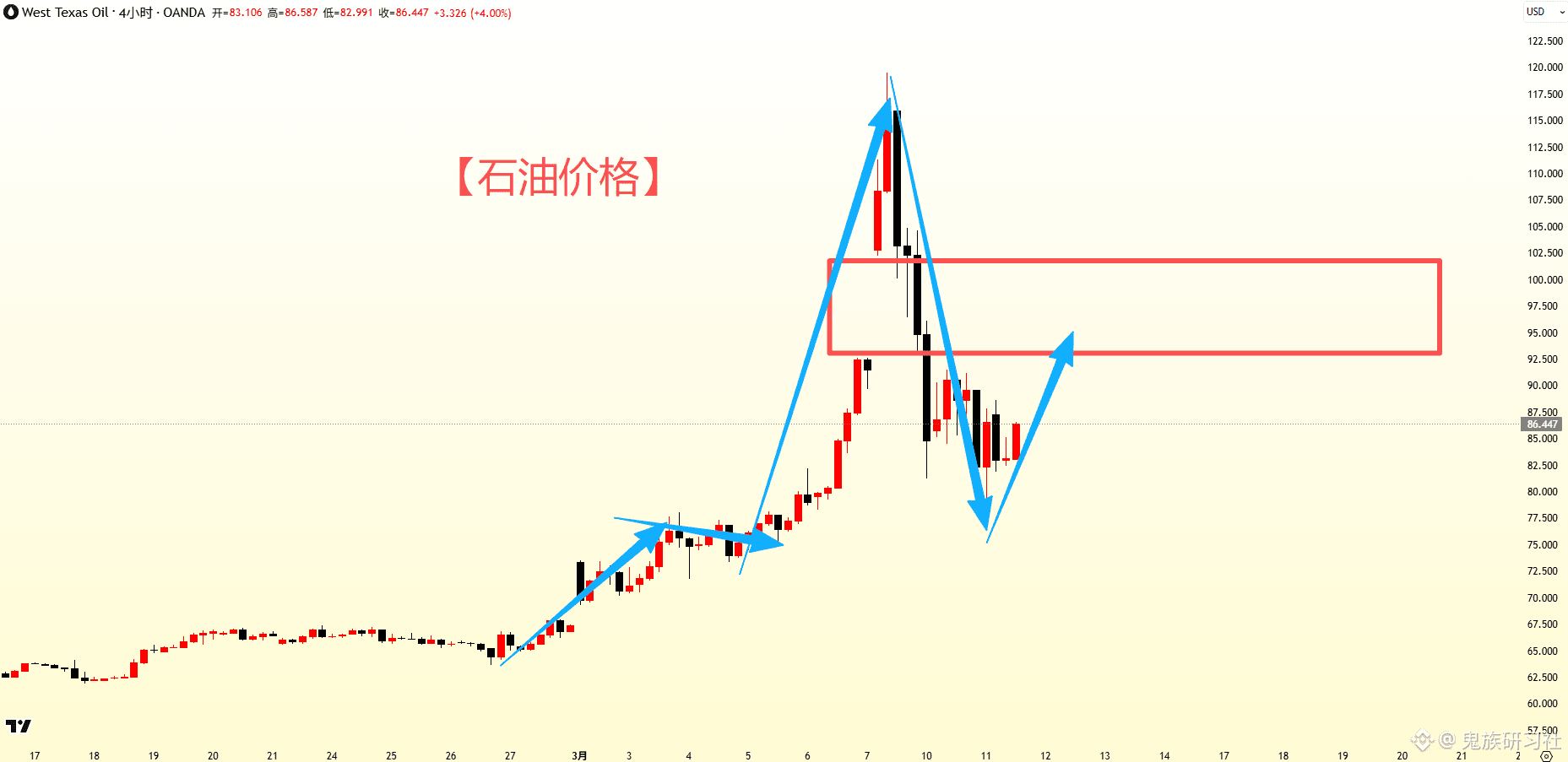
Trump stated that if Iran dared to take any action to block oil shipments through the Strait of Hormuz, the United States would respond with "20 times stronger strikes than before." Then, on the 10th, he posted on social media, threatening Iran against laying mines in the strait and claiming that the US military had destroyed Iranian mine-laying vessels.
However, the situation took a subtle turn the following day. The White House stated that the US Navy was not currently providing escort for any oil tankers or ships passing through the Strait of Hormuz. This contradicted the earlier claim by the US Energy Secretary on social media of "successfully escorting oil tankers," a post he subsequently deleted.
While the overall situation seems comical and laughable, these statements have significantly impacted the price trends of oil and Bitcoin.
The good thing is that, for oil prices, although any disturbance in the Strait of Hormuz could trigger severe fluctuations, the existence of intervention measures such as strategic petroleum reserves sets a "ceiling" for oil prices. Therefore, oil prices will not continue to rise indefinitely. This explains why oil prices plummeted after reaching near-high levels; besides the news-driven shock, there was also a preemptive measure in place.
In short, we need to closely monitor Trump's actual actions (whether he will actually provide escort?) and Iran's reaction (whether he will actually impose a blockade?). These actions will determine the direction of oil prices and the next move for Bitcoin more than any verbal threats. #BitcoinReclaims$70,000 #InternationalOilPricesFallOver10%