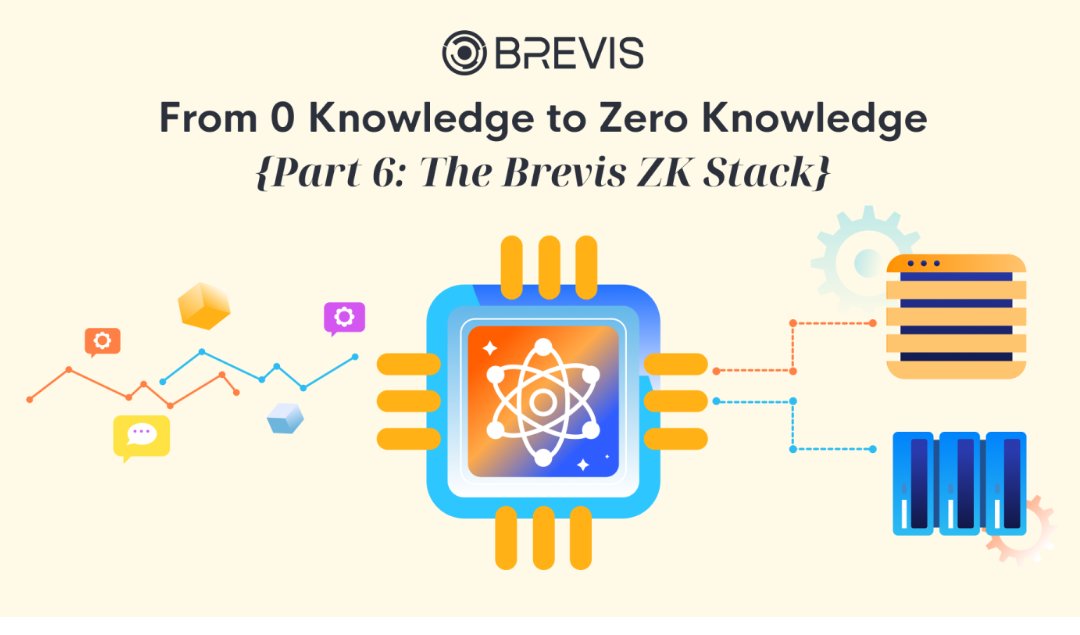
In the current climate of widespread ZK narrative, a core issue is being overlooked: while the industry is becoming increasingly segmented, real-world on-chain needs are never singular. Rollups require throughput, cross-chain transactions require verification, identity requires privacy, and AI requires provable computation—each sector is optimizing in silos, yet no single stack can simultaneously meet these heterogeneous demands.
Brevis (@brevis_zk) points out the key reason in Part 6: traditional ZK architectures are single-core optimized, while the on-chain world requires collaborative computing across all scenarios.
His proposed Glue-and-Coprocessor architecture is precisely the underlying paradigm missing in this era:
Pico (Minimum Core): Responsible for general logic, like a CPU.
Dedicated Coprocessor: Handles computationally intensive tasks, like a GPU/TPU.
Modular Expansion: Simultaneously supports completely different workloads such as real-time DEX personalization, batch processing of 100,000 addresses, privacy authentication, and L1 block proofs.
The result is the large-scale real-world deployment of 250M+ proofs, 6 chains, and 30+ protocols.
This is no longer just an improvement on a particular type of ZooKeeper, but a leap forward in verifiable computing infrastructure. All Web3 scenarios will be reconnected by a unified ZooKeeper computing layer.
#Brevis #ZK @KaitoAI #Yap #Yaps