Morgan Stanley: Fed Policy Unlikely to Shift Dramatically in the Short Term; Balance Sheet Reduction Unlikely to Arrive at Least Next Year
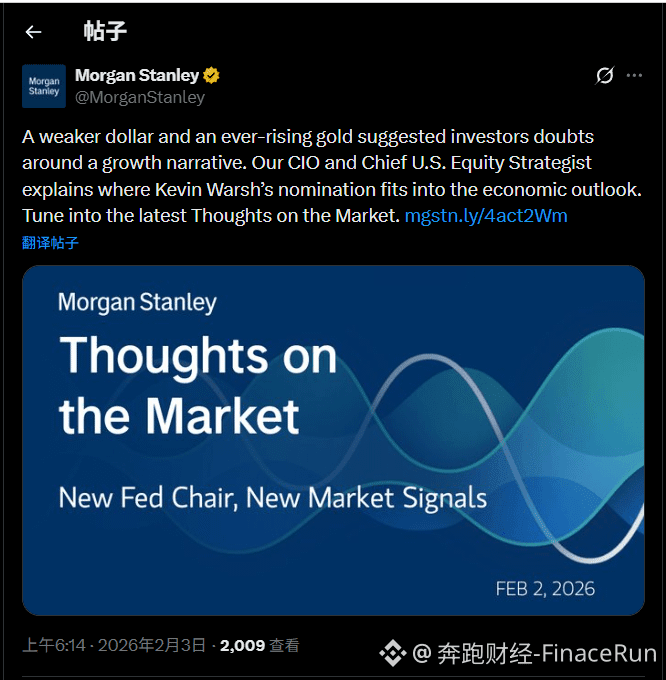
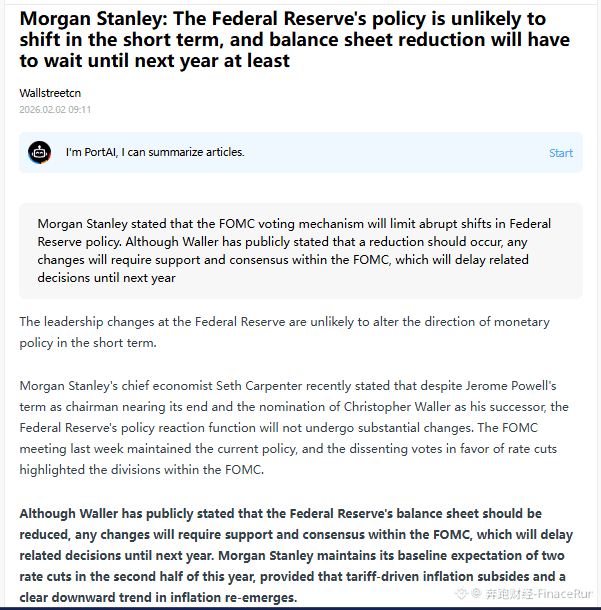
A recent analysis by Morgan Stanley indicates that despite market speculation about a policy shift following the nomination of the new Fed Chair, a balance sheet reduction plan is unlikely to enter the substantive agenda until at least next year.
The report points out that the Fed's policy decisions are not driven by individual will but are a complex process collectively agreed upon by the Federal Open Market Committee (FOMC).
While new Chair Kevin Warsh has indeed expressed concerns about the large balance sheet, a substantial policy shift requires broad consensus within the committee, which cannot be achieved overnight.
Therefore, even if Warsh favors accelerating policy normalization, internal coordination will limit substantive discussions and implementation of balance sheet reduction in the short term, making a rapid policy shift unlikely in the short term.
Furthermore, regarding the market's focus on the prospect of interest rate cuts, Morgan Stanley maintains a cautious baseline forecast. The bank believes there may be room for two rate cuts in the second half of this year, but this strictly depends on whether inflation can clearly return to a downward trajectory.
The report specifically emphasizes that if data shows a continued strong job market, robust consumer spending, and persistently sticky inflation, the possibility remains that the Federal Reserve will choose to maintain interest rates unchanged for the remainder of the year.
In short, the primary driver of the Fed's future interest rate policy will continue to be core economic data such as inflation and employment, rather than simply personnel changes.
The analysis concludes by pointing out that a genuine policy shift will be gradual and highly data-dependent. Even if adjustments occur in the future, they are expected to be reflected first in the balance sheet, rather than in the benchmark interest rate.
This relatively cautious expectation not only provides a moderate "rate cut" expectation for a potential radical shift in the market but also emphasizes the continuity and stability of monetary policy in a complex environment.
#MorganStanley #FedPolicy