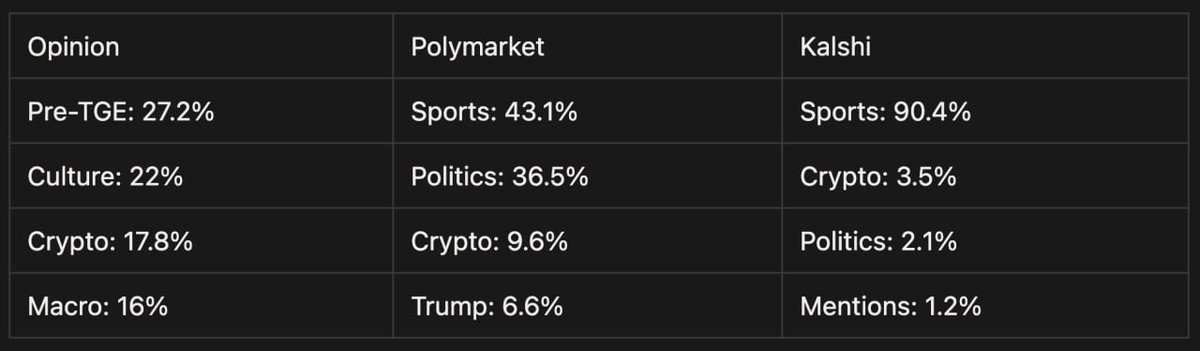
1/ Most prediction market comparisons overlook a crucial point: category mix
- Kalshi: Sports approximately 90%
- Polymarket: Sports + Politics approximately 80%
- Viewpoint: More balanced across categories like TGE/Culture/Cryptocurrency/Macroeconomics
So, what drives this shift? Is it culture (regional demand) or a preference for curated selection?
2/ My current view (after discussions with traders on these three platforms):
Culture reflects the scope of demand, while curated selection determines whether that demand translates into repeat purchases.
US users are deeply involved in sports betting, and US politics has become a major reality show, making retailers highly sensitive to political events. Therefore, Kalshi/Polymarket naturally optimizes for fewer markets but offers a wider range of betting options, making it ideal for high rollers and professional consumers.
3/ The demand in Eastern markets, or rather, the focus and knowledge level of retailers, is drastically different.
In China, discussing politics is strictly restricted. Japanese retailers, on the other hand, are largely indifferent to it. South Korean retail focuses more on pure speculation and popular culture/Korean dramas.
This is precisely Opinion's real strength: its ability to keenly capture local culture, thus maintaining the vitality of the mid-to-long tail market.
4/ Just as the Chinese version of Instagram (RedNote) is vastly different from Instagram itself, localization is key to the long-term success of prediction markets in product design and marketing.
I believe we will ultimately see two different prediction market models catering to different user preferences, much like most culture-centric products.