





















Author:TechFlow
Written by: Yellow Lobster, Deep Tide TechFlow
On February 22, an article titled "The 2028 Global Smart Crisis" went viral in the financial world. Authored by the macro research firm Citrini Research, the article is presented as a "memorandum from the future," setting the timeline to June 2028 and reviewing how this AI-triggered economic crisis gradually escalated into a systemic collapse.
One sentence in the article reads, "In early 2026, the first wave of layoffs triggered by the replacement of human intelligence began. Profits expanded, earnings exceeded expectations, and stock prices hit record highs."
Four days later, this statement was no longer a thought experiment.
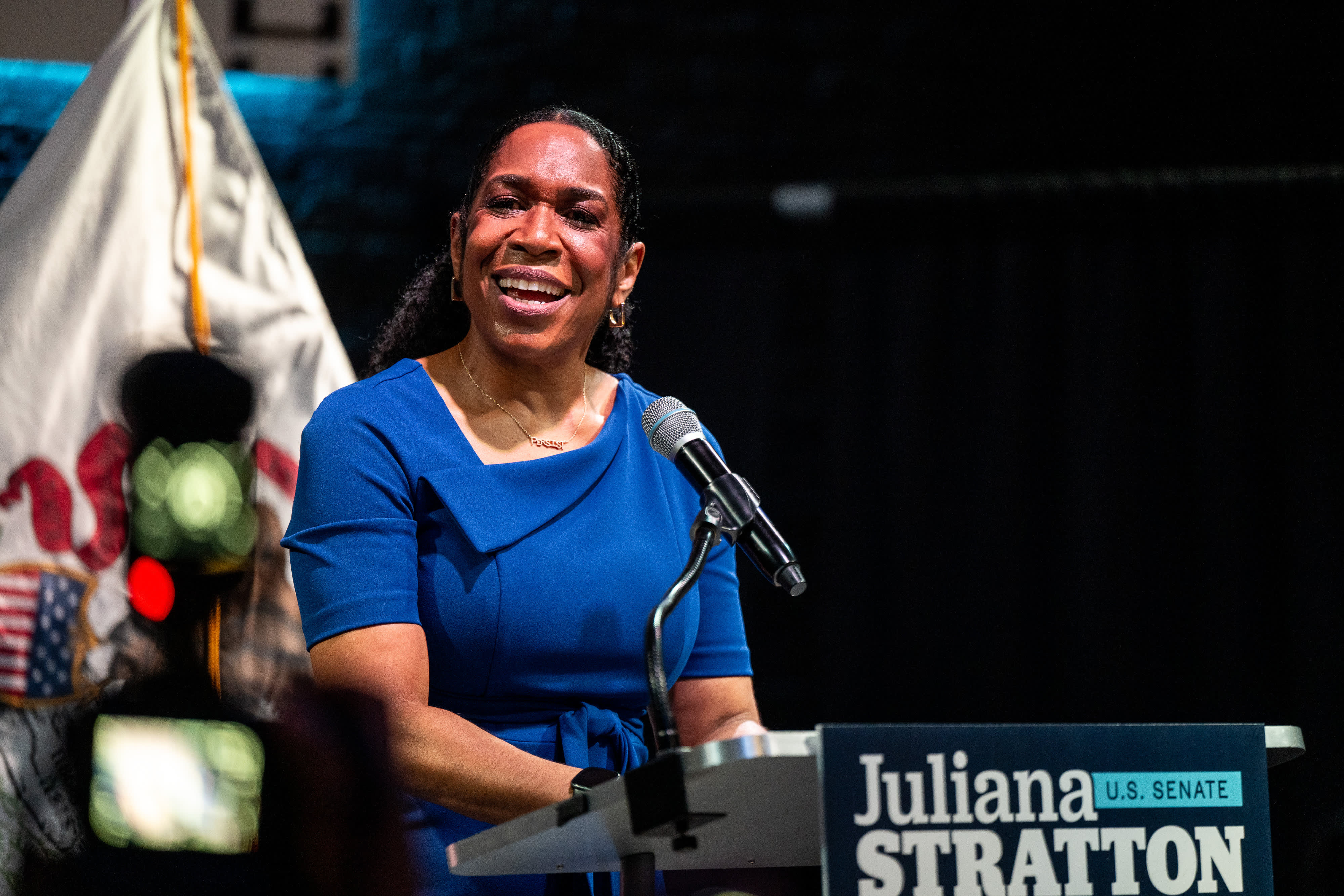
On February 26, Jack Dorsey posted on X: "We're making @blocks smaller today."
Block, the fintech company that owns Square and Cash App, released its fourth-quarter earnings report that day. Gross profit increased by 24% year-over-year, and earnings per share exceeded analysts' expectations. Meanwhile, Dorsey announced layoffs of over 4,000 employees, representing 46% of its total workforce.
Following the announcement, Block's stock price rose 24% in after-hours trading.
The company's performance increased by 24%, the stock price increased by 24%, and then 4,000 people received resignation notices.
Citrini's "2028 Nightmare" didn't wait until 2028; it began its first act this Thursday.
We are not in trouble
Historically, every large-scale layoff has been accompanied by a set formula in the CEO's open letter:Faced with a challenging market environment and a strategic shift, we made a difficult decision. We thank every colleague for their contributions.
Dorsey's letter was different.
“We’re not in trouble. Our business is strong… but something has changed. We’ve seen internally that smaller teams are doing more and doing better, in conjunction with the smart tools we’re building and using. And the capabilities of these tools are compounding every week.”
The lack of mention of the market downturn, the fact that the company is doing very well but you no longer need it, and this frankness is unsettling.
Past layoff narratives always included an implicit promise: we'll rehire once the market improves. This time, Dorsey didn't even make that promise. He offered a different logic:Small teams with AI can do the same things as large teams, or even better. If that's the case, why are so many people still needed?
Investors fully agreed with this logic and voted with a 24% increase in share price.
There is another detail that may have been overlooked.
To promote an "AI-first" work culture, Dorsey previously required every employee in the company to send him a weekly email listing five recently completed tasks. Thousands of emails flooded in, and Dorsey's approach was to use AI to aggregate them and then read summaries.
Using AI to determine who can prove they won't be replaced by AI, and letting AI analyze who will be laid off—this detail is the most precise metaphor in the whole story.
A timeline, an acceleration
Block is not an isolated case; it is a trend that has been running for two years.
Looking back in time, the acceleration of this trajectory is dazzling.
In 2024, Klarna CEO Sebastian Siemiatkowski made a high-profile announcement that the company's AI customer service assistant handled the equivalent of the workload of 700 full-time employees. At the time, most people saw this as a tech show; the CEO needed a headline-grabbing figure and a story to convince investors.
In April 2025, an internal memo from Shopify CEO Tobi Lütke was leaked. One sentence in the memo has been repeatedly quoted since: "Before requesting additional staff, the team must first prove that AI cannot do this."
In the same year, Duolingo announced its "AI-first" strategy, terminating a large number of content creation outsourcing contracts. IBM admitted to replacing 8,000 human resources positions with AI, and CEO Arvind Krishna made no attempt to conceal this in an interview, directly naming which department and how many people were involved.
Salesforce laid off 4,000 customer support positions, with CEO Marc Benioff stating, "AI can now handle about half of the company's work."
By the end of 2025, data from Challenger, Gray & Christmas, a US employment tracking agency, showed that more than 55,000 layoffs were directly attributable to AI that year.
At the start of 2026, Amazon announced two rounds of layoffs totaling approximately 30,000 corporate jobs. Law firm Baker McKenzie followed suit, cutting 600 to 1,000 research, marketing, and administrative support positions—an industry widely considered one of the most difficult for AI to penetrate.
On February 26, 2026, Block. A profitable company laid off 46% of its employees in one go.
But layoffs are just the most obvious weapon.
A Harvard University study has revealed a more hidden statistic:Since the widespread adoption of AI, tech companies are hiring an average of five fewer junior employees each quarter. Jobs disappear quietly from recruitment websites without announcements or press releases, and resumes submitted by recent graduates vanish without a trace; the reasons are never mentioned in rejection letters.
The spiral Citrini mentioned
Let's go back to that viral article.
Citrini's projections are unsettling not only because they depict a dystopian future where AI sweeps the job market, but also because they depict a...A death spiral that is logically consistent and completely rational at every step.
The spiral operates as follows:
AI expands company profits. The funds from these profits are then reinvested in AI, leading to even stronger AI capabilities. These stronger AI capabilities make more jobs replaceable. More unemployment means less consumption. Shrinking consumption puts more pressure on companies, forcing them to further reduce costs using AI. AI's capabilities have thus been enhanced once again.
Citrini gave this loop a name:Human Intelligence Replacement Spiral(Intelligence Displacement Spiral).
They wrote in the article: "The individual decisions of each company are rational, but the collective result is disastrous."
Now, let's compare this to what happened on Block. Gross profit rose 24%, stock price rose 24%, 4,000 people lost their jobs, and the money saved was reinvested in AI tools. From Dorsey's perspective, this was a completely rational decision. He even explained in an open letter why he chose a one-time large-scale layoff instead of multiple rounds of gradual reductions: because that would have continuously damaged morale and trust.
From a corporate governance perspective, this is textbook-level execution. From the perspective of those 4,000 people, it's a breakdown in their lives.
Citrini's projections include a real person (presented anonymously): a friend who was a senior product manager at Salesforce, earning $180,000 a year, who lost his job in the third round of layoffs in 2025. After searching for six months without finding a position at the same level, he eventually started driving for Uber, where his annual income dropped to $45,000.
This is not just one person's story.
In her article, Citrini performed a simple multiplication: by multiplying the trajectory of this individual by the hundreds of thousands of white-collar workers in each major city who have experienced similar fates, the decline in consumption is no longer an abstract macro data point, but a predictable and calculable reality.
This story is unfolding simultaneously around the world, perhaps even right next to you or me.
Can't find the bad guy
Citrini's article states:
"The historical disruption model posits that existing companies resist new technologies, ultimately allowing agile new entrants to erode their market share and lead to their demise. This is exactly what happened to Kodak, Blockbuster, and BlackBerry. But the situation in 2026 will be quite different. Existing companies will not resist because they cannot afford the cost of doing so."
This is the most crucial key to understanding the whole situation.
Klarna was impacted by AI, then used AI to cut costs and laid off a number of employees. Salesforce's software products were challenged by AI, then used AI to replace 4,000 customer service positions. Block was hit by the AI wave in the fintech industry, then announced a restructuring of its entire organization using AI, laying off nearly half of its employees.
They are not victims defeated by AI. They are the most active adopters of AI; it is their own employees who have been defeated.
This is the part that is most difficult to deal with within the framework of morality.
After the 2008 financial crisis, people knew who to hate: Wall Street bankers, traders who packaged and sold junk bonds, and officials who failed in their regulatory duties. The anger had specific targets, even addresses, which led to the Occupy Wall Street movement.
This time is different.
It's hard to say Dorsey did anything wrong. Block's stock price tells you what the market thinks, and the 4,000 laid-off employees didn't do anything wrong either; they just happened to be working in roles that were being restructured. AI itself is certainly not a bad guy; it's just a tool that's becoming increasingly useful at a speed never before seen by humans.
Responsibility permeates the entire system, like salt dissolving in water; you can taste the saltiness, but you can't find the grain of salt.
There are two sentences in Citrini's article that are not widely quoted, but they may be the most profound sentences in the entire text:
"For the first time in history, the most productive assets in the economy have created fewer, rather than more, jobs. No framework applies because none of them were designed for a world where scarce factors of production have become abundant."
After every technological revolution, humanity has found a new place. The steam engine replaced hand-weaving workers but created railway workers, factory managers, and urban planners. The internet eliminated travel agencies, physical record stores, and classified ads but invented product managers, data analysts, and content creators. Each time, those "jobs of the future" were initially indescribable, but they eventually emerged, and in enough numbers.
This comforting principle has encountered a challenger for the first time.
This time, AI itself is learning to do those "future jobs," such as AI trainers, AI prompt engineers, and AI product managers. The workers being replaced cannot simply "upgrade their skills" and switch to AI-related positions, because those positions themselves are being reduced in size.
Harvard researchers have documented a phenomenon:Since the widespread adoption of AI, tech companies have seen a drop of over 50% in hiring for entry-level positions. This isn't because these jobs have disappeared, but because they were never actually created.
An entire generation is trained to enter an industry, and then, just as they are about to graduate, that industry quietly decides that it no longer needs entry-level humans.
We can't pretend we have time to think things through.
Citrini ends by saying the canary is still alive, but the miner's problem is never whether the canary is dead or not, but whether you have an exit when it starts to sway.




No Comments