





















Author:区块链网
n the world of cryptocurrencies, market conditions fluctuate like the tides, and every decision can bring huge returns or profound lessons.
In February 2026, as the price of Bitcoin fell to around $78,000, Ethereum struggled around $2,300, and market sentiment was extremely low. At this time, a post by a veteran in the industry attracted widespread attention: "As the person under the most pressure on the entire internet right now, I must first admit that it was indeed a mistake to be bullish on ETH too early after clearing out my positions at the top. BTC was around 100,000, while ETH was consistently around 3,000, which we considered undervalued. Currently, the previous round of profits has been retraced, and position size determines strategy. While controlling risk, we will continue to wait for the market to move upwards. Thank you for your concern. Investing and trading are the most difficult things. Being in this industry, it's always tempting to be bullish."
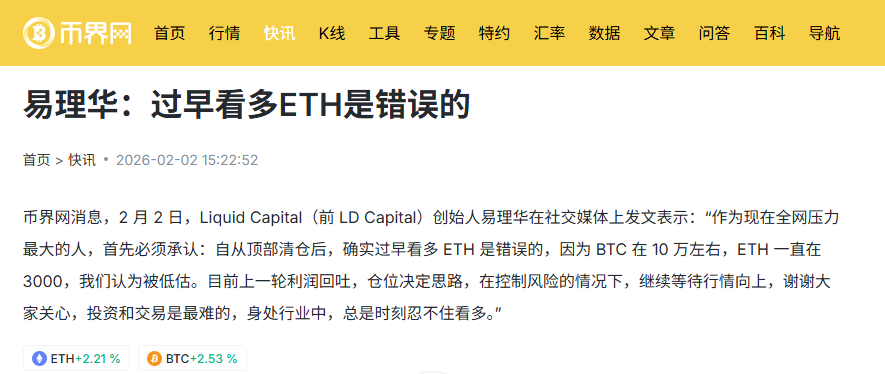
Source: CoinMeta
This poster was Yi Lihua. According to a tweet from on-chain analyst Ai Yi on February 2nd, Yi Lihua's ETH holdings had already suffered a floating loss of over 500 million, with a liquidation price around $1800. This means that if the price drops another 20%, this industry veteran will face the risk of liquidation.
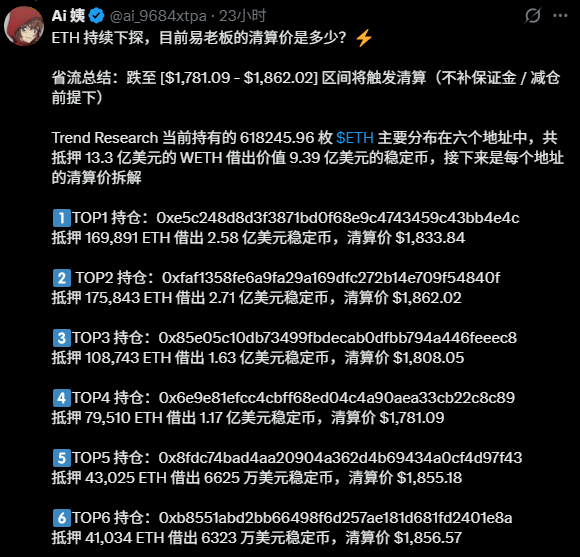
Source: Twitter @ai_9684xtpa
From INBlockchain to 100x Returns
Yi Lihua's crypto journey, from the early days of Bitcoin, has been inextricably linked to the industry narrative. In 2016, he co-founded INBlockchain, an institution that quickly became a pioneer in blockchain investment. INBlockchain's investment logic is simple yet efficient: focusing on technological innovation and ecosystem building. Yi Lihua has invested in projects such as BeX, GXChain, BUBI, ChainX, ETH, BTM, Zcash, EOS, Beechat, Mixin, and aelf, covering multiple areas from public chains to DeFi and exchanges. Imagine, at that time, Bitcoin was far from reaching its current level of approximately $77,800, and Ethereum was just an emerging smart contract platform. Yi Lihua's foresight allowed him to capture the early profits of these projects, with an overall return of over 100 times. This was not just luck, but stemmed from his profound understanding of the decentralized nature of blockchain. He often says that blockchain is not a simple speculative tool, but a new paradigm reshaping the financial order.
LD Capital's Trend Philosophy
In 2018, Yi Lihua founded LD Capital, later renamed Liquid Capital. This institution focuses on trend investing, emphasizing "buying in a bear market and selling in a bull market." Yi Lihua's team excels at identifying potential opportunities through data analysis and market research. For example, during the DeFi summer boom of 2020, Liquid Capital invested in multiple lending protocols and liquidity mining projects, helping institutional clients achieve high returns. His investment philosophy is heavily influenced by Peter Lynch: don't try to buy at the bottom or sell at the top, but follow the trend and control risk. Looking back on his career, his early experience of accumulating his first 5 million yuan from poverty has made him particularly focused on position management. "Position size determines strategy," is a key sentence in his recent post. In January 2026, after Bitcoin prices fell to a low level, they rebounded. Derivatives data showed no signs of extreme panic, consistent with Yi Lihua's judgment: although there was leverage liquidation in the market, the fundamentals had not collapsed.
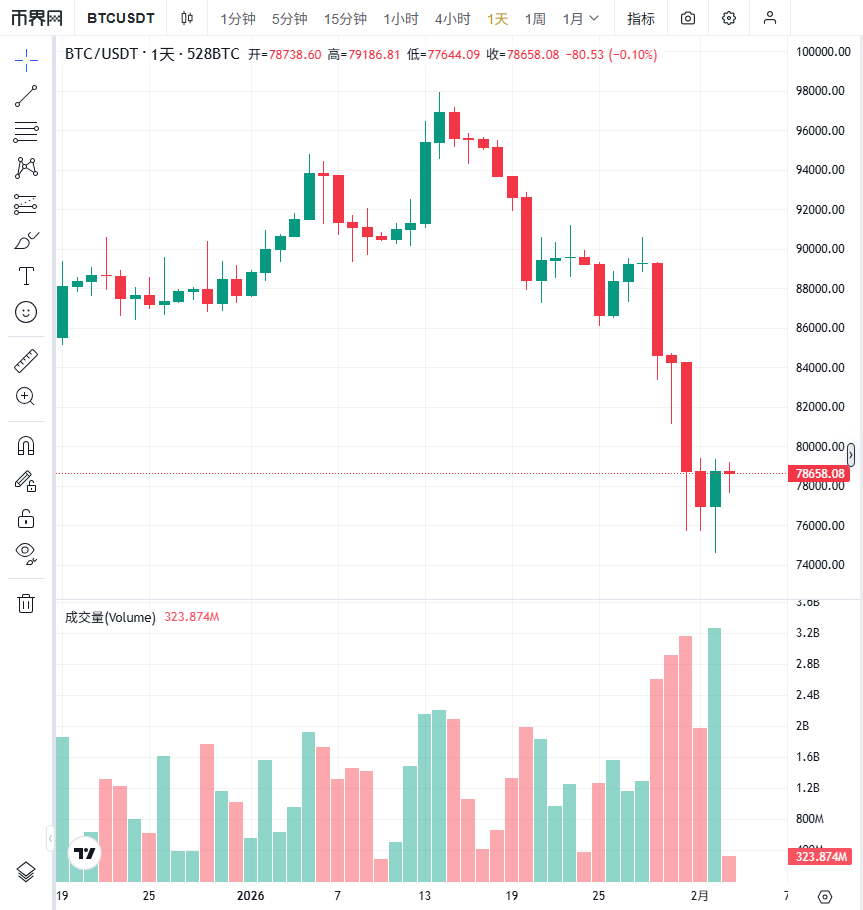 Source: CoinMeta
Trend Research's Thrilling Gamble
Recently, Yi Lihua's ETH investment has become the focus of the market. His firm, Trend Research, employed a leveraged strategy: staking ETH in DeFi protocols like Aave to borrow stablecoins and continue accumulating positions. This is a classic amplifier approach, treating Ethereum as a leveraged version of Bitcoin. In late 2025, as Bitcoin's price fluctuated, Ethereum failed to rise in tandem, hovering below approximately $2290. Yi Lihua publicly admitted that his premature bullish stance was a mistake, stemming from underestimating the impact of declining market liquidity. A CoinDesk analysis in January 2026 showed that Ethereum, after rebounding from its 2025 lows, entered a correction phase. Yi Lihua's holdings suffered significant unrealized losses, nearing liquidation. This experience resembled a crypto-themed thriller: during ETH price corrections, his average cost basis was high, leading to immense pressure from losses. Many viewed it as a disastrous defeat, but Yi Lihua meticulously analyzed the situation, emphasizing that the "previous round of profit retracement" was a normal cycle.
Who is "draining" liquidity, and who is building it?
This narrative evokes a stark reminder of the harsh realities of crypto investment. Yi Lihua once urged Binance founders CZ and He Yi to use platform profits to buy assets like BTC/ETH, arguing that while companies like Tether were highly profitable "pump and dump" companies, they neglected industry development. Conversely, compliant stablecoins like USD1, by subsidizing users and buying ETH, were truly "keeping building." This view resonated in a Cointelegraph report: in 2026, with the advancement of crypto infrastructure legislation, large-scale participation of US financial institutions in DeFi will become a reality. Yi Lihua predicts this will spawn a large number of high-quality projects and clear obstacles for crypto's integration into mainstream finance. His optimism is not unfounded: despite short-term capital outflows from Ethereum, Layer 2 solutions like Optimism and Arbitrum have seen continuous growth in their TVL (Total Value Locked), indicating strong fundamentals.
Maintaining the Technological Foundation
During the Meme coin craze of 2025, when retail investors were frantically chasing DOGE and SHIB, Yi Lihua maintained a rare composure. He believed that while Meme was interesting, it lacked a long-term technological moat.
He favors an Ethereum 2.0 upgrade path driven by Neo-banks. From a rural youth struggling to make ends meet to a thought leader managing vast assets, his ten years of experience offer advice to young investors: setbacks are essential for growth and development.
Conclusion: Yi Lihua's story is a microcosm of the crypto era. Despite the unprecedented pressure of investing in ETH, his candid self-reflection and optimism remain a guiding light for the community.
At this crucial juncture in 2026, a year of parallel compliance and decentralization, his advice is particularly valuable: control risk, diversify positions, and wait for the upward trend. The crypto market doesn't believe in tears, but it rewards those who persevere in research and rational judgment even on the edge of despair.


No Comments