





















Author:币圈头条
The Spanish Red Cross (Creu Roja) recently deployed RedChain, a blockchain-based digital aid platform. The platform uses the Ethereum blockchain and zero-knowledge proof (ZK) technology to achieve transparent tracking of donated funds while strictly protecting the privacy of recipients and preventing the leakage of personal information. This system not only improves the efficiency of aid but also provides donors with verifiable proof of their contributions, offering a verifiable new path for the digitalization of global humanitarian aid.
In the bustling Sant António Market in Barcelona, a single mother nervously pulls out her phone at the checkout counter. Instead of pulling out the paper voucher marked "Poverty Aid"—a voucher likely to attract unwanted attention—she opened a simple digital wallet and scanned the merchant's QR code.
With a "beep," the transaction was complete.
There was no T+2 settlement from banks, no cumbersome identity verification, and no delays from layers of approval by charitable organizations. At the moment that single mother walked out of the supermarket, the Ethereum block height increased by only a few digits, but for the global humanitarian aid industry, which flows with hundreds of billions of dollars annually, this could be a paradigm shift in the humanitarian aid system. Just this week, the Spanish Red Cross (Cruz Roja Española) officially deployed its blockchain-based digital aid platform—RedChain.
For those in the cryptocurrency world accustomed to on-chain transactions, RedChain might not sound well-known, lacking the Ponzi model and the meme effect of massive gains. But if you can see beyond the surface to the essence of the protocol layer, you'll find that this is a grand experiment about "Sovereign Identity (SSI)" and "atomic settlement." Instead of building a closed Web2 database, the Spanish Red Cross partnered with Billions Network and Barcelona-based infrastructure company BLOOCK to build a payment system on the Ethereum ecosystem based on programmable token standards and zero-knowledge proof technology. This signifies that the RWA's narrative has moved beyond simply tokenizing government bonds, delving into the most fundamental aspects of social governance.
The Technological Logic and Business Game Behind the Protocol
In traditional charitable aid models, trust is an expensive luxury. When you donate $100 to a large organization, you must trust its financial statements, the local contractors distributing the supplies, and the bank's transfer system. However, reality is often harsh—according to past data, up to 30% or more of charitable donations are wasted on administrative management, exchange rate frictions, and opaque black-box operations. This is the original entry point for blockchain technology: a decentralized trust machine.
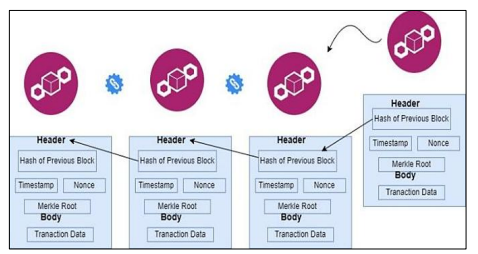
RedChain's core architecture is ingenious, avoiding the pitfalls of early blockchain projects that focused on "on-chain for the sake of on-chain." Instead of attempting to expose all user information on the blockchain (which would be a privacy disaster), it employs a hybrid architecture of "off-chain data storage and on-chain proof storage." According to BLOOCK's technical documentation, sensitive information about recipients (such as name, address, and family situation) is strictly stored in the Red Cross's private database, while only the cryptographic hashes and integrity anchors of this data are uploaded to the blockchain. This means that any external auditor or donor can verify the flow of funds and the authenticity of each transaction through a blockchain explorer, but cannot reverse engineer the recipient's identity. This is known in the Web3 space as "perfect decoupling of data availability and privacy," solving a compliance problem that has plagued the industry for years.
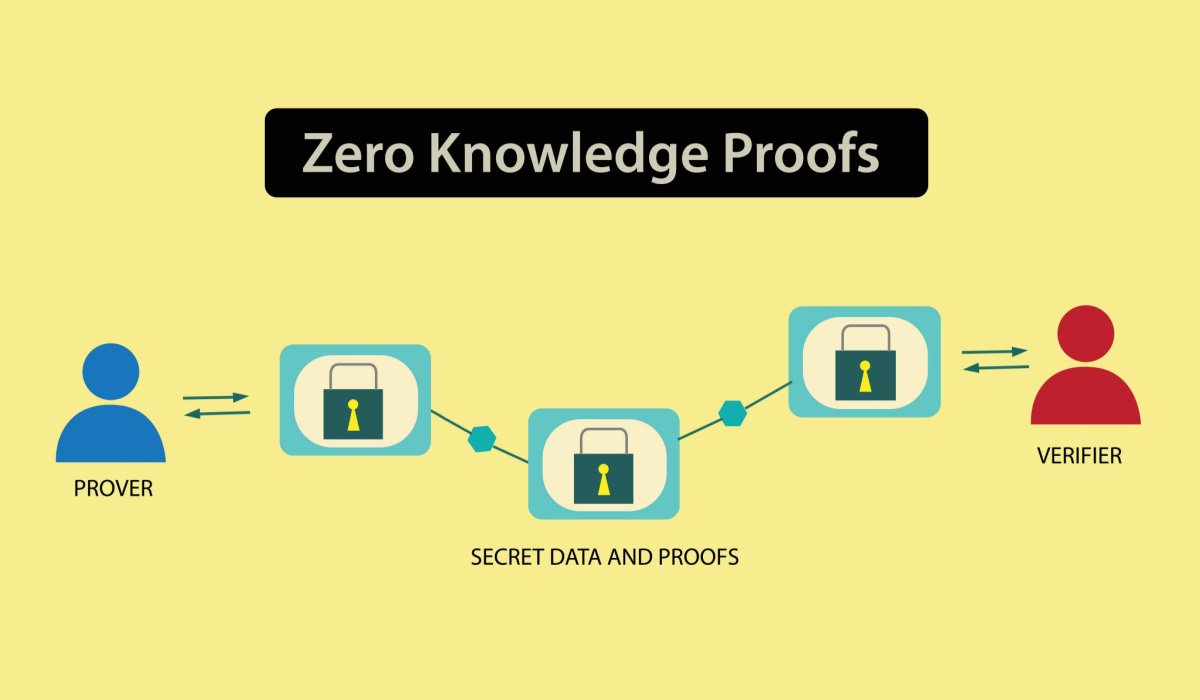
Even more exciting is its practical application of zero-knowledge proofs. In the Web3 context, we are accustomed to using ZK to scale Ethereum (such as ZK-Rollups), but in RedChain, Billions Network uses it for "personality proof." Imagine a single mother using aid funds without needing to show her ID to the cashier or expose her vulnerable status as a "refugee." The underlying ZK protocol only needs to prove to the smart contract that "the user holds a valid and unexpired aid voucher," without revealing "who she is." This technology, which separates the "right to verify" from the "right to know," is precisely the most humane application scenario in real society for "Soul-Bound Tokens (SBTs)," which Vitalik Buterin has repeatedly emphasized.
 From a token economics perspective, RedChain's design is also highly inspiring. It abandons direct payments using highly volatile cryptocurrencies, instead using "aid credits" based on the ERC-20 standard. These tokens are essentially closed-loop stablecoins, usable only at whitelisted merchants. This design sounds like a Web2 points system, but its underlying settlement logic is revolutionary.
In the traditional banking system, merchants often have to wait weeks or even months to receive fiat currency repayments from charities after receiving vouchers. This cash flow pressure causes many small businesses to refuse to participate in aid programs. Under RedChain's system, smart contracts achieve "atomic settlement"—once the single mother's QR code is scanned, the on-chain contract is immediately triggered, and the merchant's wallet receives the equivalent value in fiat stablecoins or convertible certificates within seconds (depending on the final confirmation time of Ethereum or L2). This improvement in the efficiency of fund transfers represents a significant upgrade in the experience for small businesses, significantly reducing their cash flow costs. It eliminates financial friction, allowing goodwill to be delivered instantly, like an email.

We must recognize that this initiative by the Spanish Red Cross is not an isolated innovation, but rather a microcosm of the broader trend of "invisibility" in the Web3 industry by 2026. Looking back over the past two years, the industry has been obsessed with building complex DeFi Lego towers, neglecting the entry barriers for ordinary users. RedChain's design philosophy embodies the user experience direction pursued by account abstraction. For users like that single mother, she has no idea what a private key or gas fee is, nor does she need to remember a mnemonic phrase. Her mobile application interface is indistinguishable from a regular banking app, but it runs on the most censorship-resistant distributed network. This seamless Web3 experience is on the eve of mass adoption. When technology no longer serves Wall Street traders but begins to serve ordinary people who need basic necessities, we will truly be touching a corner of Satoshi Nakamoto's vision. This also explains why several leading investment institutions began significantly increasing their investment in infrastructure and compliance/privacy by the end of 2025—because B2G (Business to Government/NGO) businesses like RedChain are becoming the gateway to the next billion users.
Of course, the implementation of any technology is accompanied by competition. The emergence of RedChain may threaten the vested interests of those in the traditional charitable system. For intermediaries that rely on information asymmetry to earn management fees, smart contracts will compress their operational space. In this system, code is law; once a contract is deployed, the flow of funds is strictly enforced by algorithms, preventing anyone from misappropriating them. While this transparency is appealing, it also poses a significant challenge to the Red Cross's own digital management capabilities. If corruption occurs in the off-chain data entry process, the immutability of the on-chain system may actually solidify errors. Therefore, ensuring the authenticity of data "before it's on-chain" will be the final hurdle that the DID (Decentralized Identity) field needs to overcome in the next two years.
Looking back at the Spanish Red Cross's move from 2026, we see more than just a charitable project; it's an experiment in the sociology of money. It heralds the birth of a new type of social contract: in which trust between donors, recipients, and implementers no longer relies on brand endorsement, but on the mathematical determinism of cryptography.
RedChain is just the beginning. As this model proves successful, we have reason to predict that this architecture could be piloted and replicated in a wider range of social welfare scenarios in the coming years.
Firstly, the on-chain implementation of UBI is moving from conceptual discussion to the stage of technical feasibility verification. Government-issued unemployment benefits and pensions are highly likely to adopt a similar ZK+ERC20 architecture to ensure accurate and direct fund transfers and prevent illegal interception. The visions of projects like Worldcoin may be realized from the top down by national institutions through this more moderate and compliant approach.
Secondly, "programmable donations" will become mainstream. Future donors will no longer simply throw money into a black hole, but can set smart contract conditions for their funds—for example, "This money can only be used to purchase heating equipment when the temperature in the recipient area is below 0 degrees Celsius." This oracle-based conditional finance will completely reshape the liquidity logic of the charitable sector.
Finally, this will force further integration of fiat currency and on-chain assets. To support this atomic settlement, central bank digital currencies (CBDCs) or compliant stablecoins will have to accelerate interoperability with public blockchain ecosystems. What we are witnessing is a perilous leap for Web3 from a "speculative tool" to a "social infrastructure." In this leap, the QR code in the hand of that single mother is the mainstream narrative that truly deserves our attention.


No Comments