






















Author:Currency Explorer
AI Podcast: A New Way to Listen to the News Download MP3
Audio is generated from button space.
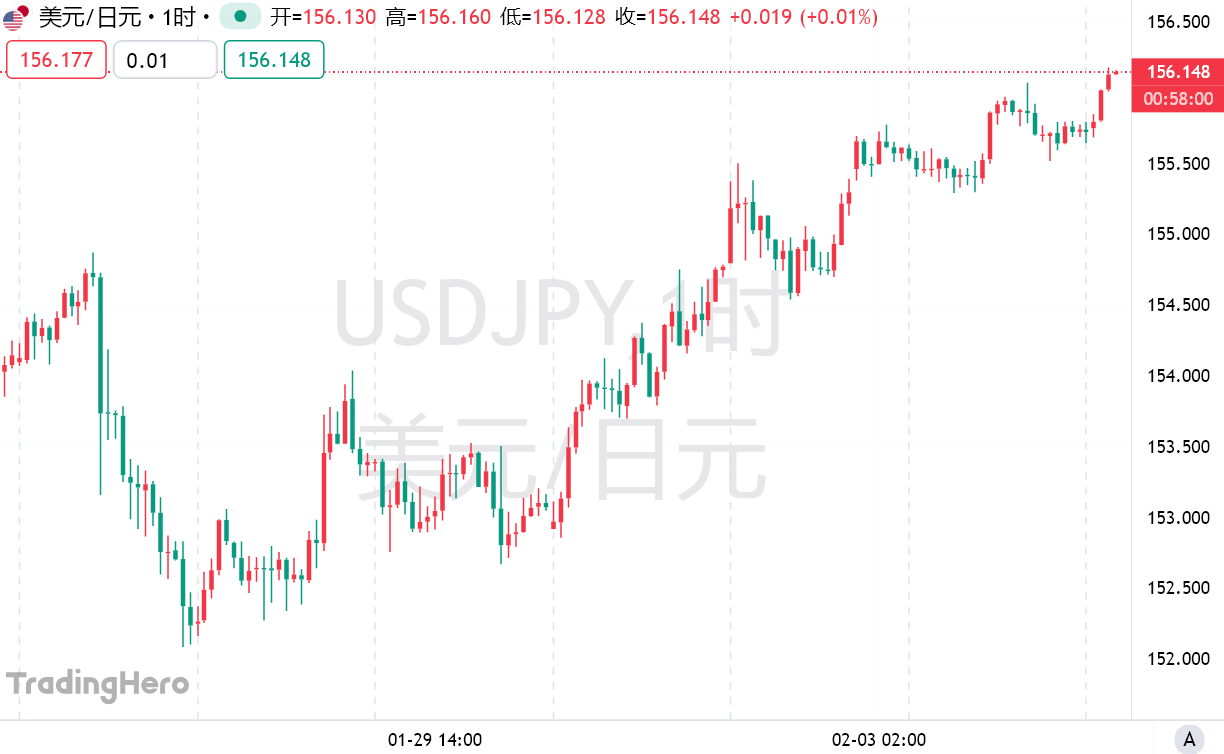
Hedge funds are rekindling their bets on shorting the yen, positioning themselves for a potential return to weakness following Japan's crucial election this weekend.
Ahead of the February 8 general election, Prime Minister Sanae Takaichi mentioned the benefits of a weak yen, bringing the USD/JPY exchange rate back into the market spotlight. She called for this snap election to consolidate her leadership, with polls showing her party poised to win a single majority—a result that could give her more room to implement fiscal stimulus, thereby exacerbating Japan's already heavy debt burden.
The options market reflects this shift. According to data from the Depository Trust & Clearing Corporation, on Tuesday, call options worth $100 million or more that would profit from a rise in the USD/JPY exchange rate outnumbered put options of the same size. As demand for call options increased, the hedging premium required to hedge against a decline in USD/JPY over the next month (compared to an upside risk) has fallen to its lowest level in nearly two weeks.
"The market has now stabilized somewhat, and the extreme bubble in the precious metals market has subsided. Hedge funds are increasingly returning to carry trades and high-market trading,"Antony Foster, head of G10 spot trading at Nomura International Ltd. in London, said."With the Japanese general election just this weekend, the market sentiment that USD/JPY will rise to higher levels is returning, especially if the high-performing pair achieves a landslide victory."
Since Sanae Takaichi won the leadership of the Liberal Democratic Party last October, the yen has continued to weaken, falling to an 18-month low against the dollar last month. This trend reversed sharply after the New York Fed's review of the dollar/yen exchange rate on January 23, and was subsequently reinforced by comments from Trump. However, pressure on the yen quickly returned after US Treasury Secretary Bessant reiterated support for a strong dollar policy and Kevin Warsh was nominated as the next Federal Reserve Chairman.
Sanae Takaichi's latest comments have further strengthened bullish sentiment in the market for USD/JPY.
“The comments over the weekend emphasizing that a weak yen is good for exporters seem to have reignited market interest in buying USD/JPY,” said Mukund Daga, global head of foreign exchange options at Barclays.
In contrast, asset management firms, often referred to as "real money funds," have taken a more cautious stance amid recent volatility, awaiting greater clarity on the currency pair's next move.
“Real money funds are largely on the sidelines, using options for protection rather than making explicit bets on the direction of USD/JPY,” said Ivan Stamenovic, head of G10 currency trading for Asia Pacific at Bank of America.
Soaring stock market volatility foreshadows market anxiety ahead of Japan's general election
Japanese investors are rarely this nervous before an election.
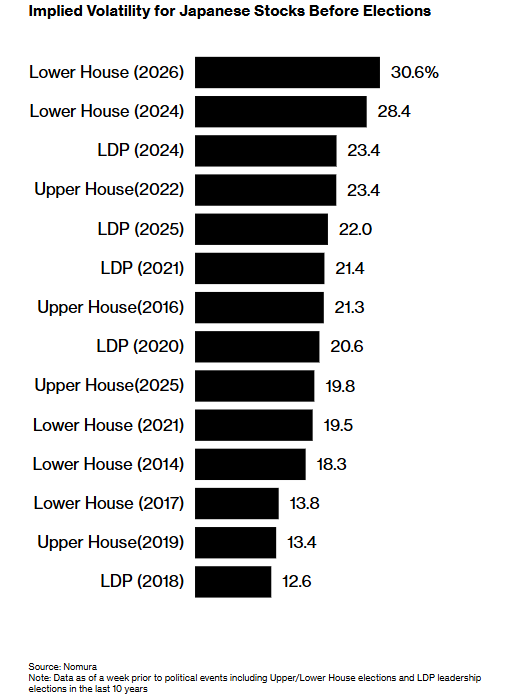
According to Yoshitaka Suda, senior cross-asset strategist at Nomura Singapore, the implied volatility of the Nikkei 225 index, a measure of expected market volatility (which typically rises when uncertainty is high), surged during the preparation phase leading up to the February 8 election.
“Despite the ruling Liberal Democratic Party’s lead in pre-election polls, investors remain apprehensive and worried,” Suda said. His research shows that as of last Friday, the figure was 30.6%, exceeding the 28.4% level before the last House of Representatives election in 2024. This is the highest level during elections over the past decade.
Higher implied volatility typically reflects investors’ perception of greater environmental risks and a shift towards a pessimistic outlook.
“Even if a landslide victory for the ruling party immediately triggers a positive market reaction, there is a risk that the stock market could suddenly turn downwards if concerns about the fiscal situation cause the yen to depreciate rapidly and interest rates to rise quickly,” said Hideyuki Ishiguro, chief strategist at Nomura Asset Management.
The only time this indicator came close to its current level in the past decade was in 2024, when the ruling coalition of the Liberal Democratic Party and Komeito lost its majority for the first time in 15 years.
Suda of Nomura Singapore stated that,Although the risk of the ruling party losing its majority of seats is small, the market is "highly focused on whether the Liberal Democratic Party can win a majority of seats on its own."
The difference this time compared to the pre-election environment of the past is that the volatility of the yen and Japanese government bonds is at a high level.
"Even if the Liberal Democratic Party wins, a weaker yen will exacerbate market concerns about currency intervention,"Suda said.For the Japanese stock market, not only the election results, but also the subsequent reactions of the yen and interest rates will be influencing factors, making the market "highly volatile in two very different ways."He added.
The current election coincides with the peak of earnings season, another factor that often disrupts markets due to unexpected news. Toyota Motor Corp., Japan's largest company by market capitalization, and Tokyo Electron Limited, which has a significant weighting in the Nikkei 225 index, are both scheduled to release their earnings on Friday (the eve of the election).
However,If history can provide guidance, the outlook for the Japanese stock market is likely positive.In the three elections in which the Liberal Democratic Party won the most seats—Junichiro Koizumi's landslide victory in 2005, Shinzo Abe's formation of his second cabinet in 2012, and the 2014 general election—the benchmark TOPIX index saw the most significant gains in the following six months, reaching 44%, 70%, and 18%, respectively.
"While vigilance against currency intervention remains, we believe the near-term risk balance for Japanese stocks ahead of the election is tilted to the upside," said Sho Nakazawa and other strategists at Morgan Stanley Mitsubishi UFJ in a report.





No Comments