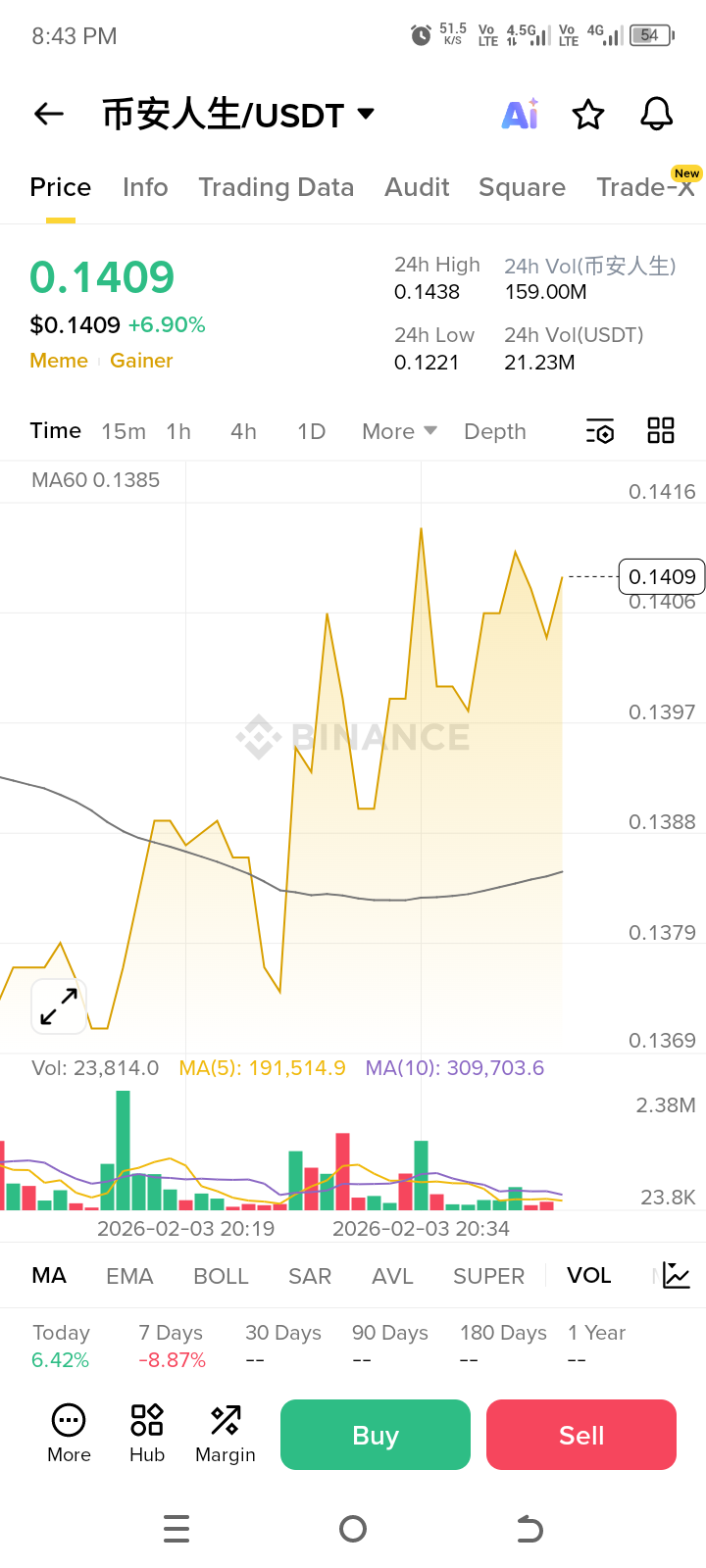
Binance Life/USDT – Meme Gainer Rising!
🚀 Entry Zone: 0.13800 - 0.14100 USDT
🎯 TP1: 0.14500
🎯 TP2: 0.15000
🎯 TP3: 0.15500
🛑 SL: 0.13500
📊 Up +6.90% today, labeled Meme Gainer. Price above MA60 (0.1385) support. Volume low (23,814 vs MA5 191,514) – caution, weak participation. Binance-themed meme – community-driven. Could retest MA60 as support before next leg.
$Binance Life
{spot}(Binance Life USDT)
#Meme #Gainer #BinanceMeme #CryptoSignal #BukhariTech

Price Converter

- Crypto
- Fiat

USDUnited States Dollar


CNYChinese Yuan

JPYJapanese Yen

HKDHong Kong Dollar

THBThai Baht

GBPBritish Pound

EUREuro

AUDAustralian Dollar

TWDNew Taiwan Dollar

KRWSouth Korean Won

PHPPhilippine Peso

AEDUAE Dirham

CADCanadian Dollar

MYRMalaysian Ringgit

MOPMacanese Pataca

NZDNew Zealand Dollar

CHFSwiss Franc

CZKCzech Koruna

DKKDanish Krone

IDRIndonesian Rupiah

LKRSri Lankan Rupee

NOKNorwegian Krone

QARQatari Riyal

RUBRussian Ruble

SGDSingapore Dollar

SEKSwedish Krona

VNDVietnamese Dong

ZARSouth African Rand
No more data