When news reports mention the resumption of high-level military contacts between the US and Russia, the first reaction is often that geopolitical risks are easing. Indeed, the US and Russia reportedly agreed to restore high-level military dialogue channels—the first time such a sustained military-to-military communication arrangement has been re-established since 2021—and this is linked to multilateral talks in Abu Dhabi. This signal itself indicates that both sides are trying to reduce the cost of miscalculation.
However, equating this directly with a stable situation is overly optimistic. The negotiations did not yield a decisive breakthrough; it's more like an action to bring the situation back under control. Even on humanitarian issues, where consensus is most easily reached, only relatively limited exchanges were possible, such as the agreement to exchange 157 prisoners of war each—executable outcomes.
If we zoom out further, today's risks don't only come from the front lines. At the same time, the last US-Russia bilateral nuclear arms control treaty, the New Strategic Arms Reduction Treaty (New START), expired, meaning the half-century-long US-Russia arms control framework has reached a gap. While communication channels are reopening, institutional constraints are weakening. The simultaneous existence of these two forces makes it more difficult for the market to simply price in risks. This uncertainty manifests itself in two ways. First, traders tend to shorten duration, unwilling to lock funds in assets requiring longer-term realization narratives. Second, funds prioritize portability, able to move from risky to defensive positions and back to opportunistic positions within minutes. Whether a market is bearish or not is rarely determined by a single statement, but rather by how long this preference persists. Once geopolitical conflicts enter a phase of negotiation and back-and-forth, the market typically doesn't immediately act decisively, but rather tends to retain liquidity in readily deployable forms.
Stablecoins perfectly embody this. By early February, the global stablecoin market capitalization hovered around $304.8 billion. This figure itself indicates that much capital hasn't left the market; it has simply shifted its stance from aggressive to wait-and-see and maneuverable.
Thus, a seemingly crypto-centric issue suddenly becomes a reality. Whoever can achieve lower friction in stablecoin settlements is more likely to gain more real-world usage in this volatile cycle, rather than just emotional trading. Plasma at this point is more like a path targeting settlement needs than a stage for emotional speculation.
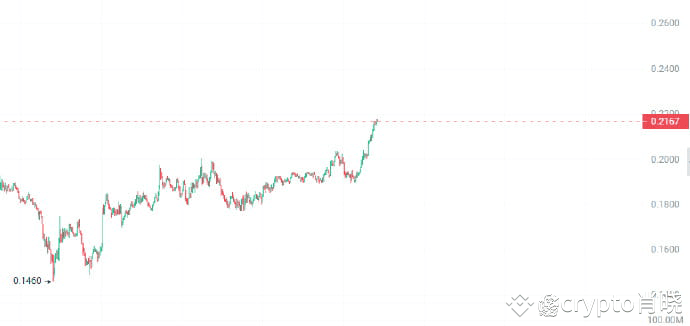
From on-chain observable data, Plasma's stablecoin size is approximately $1.917 billion, TVL is approximately $3.136 billion, and bridged TVL is approximately $7.044 billion. Comparing this to its token XPL's market capitalization of approximately $203 million, several intuitive ratios emerge: the stablecoin size is approximately 9.4 times the token's market capitalization, TVL is approximately 15.4 times, and bridged TVL is approximately 34.6 times.
These ratios don't prove whether prices should rise or fall, but they do illustrate one thing: the settlement and asset parking on Plasma is no longer just a narrative exercise. It's more like using the stablecoin size and capital accumulation to tell the market that even with a cooling risk sentiment, money still needs parking places and transfer channels.
Looking at the fee structure, it resembles a payment network. Plasma's 24-hour transaction fees are approximately $594, while the application layer's 24-hour fees are approximately $338,200, with application layer revenue of approximately $28,600. DEX trading volume is approximately $13.64 million in 24 hours. The chain layer is designed to be as inexpensive as possible, with the value primarily generated in the routing, exchange, and service aspects of the application layer. This structure aligns perfectly with the logic of stablecoin settlement infrastructure.
Placing this data within the context of the renewed high-level military contact between the US and Russia reveals a more nuanced causal chain. Increased geopolitical uncertainty leads to more frequent cross-border payments and fund transfers, especially as businesses and individuals seek more controllable settlement pathways. Traditional pathways often rely on multiple intermediaries and time lags, while the core advantage of on-chain pathways is shortening the settlement chain, making fund transfers more near-instantaneous. What's truly scarce here isn't slogans, but low-friction usability.
This is why Plasma's recent cross-chain efforts are worth repeatedly mentioning. On January 23, the integration of Plasma and NEAR Intents was publicly discussed, focusing on connecting XPL and its stablecoin USDT0 into an intent-driven liquidity network supporting over 25 chains and 125 assets. This makes cross-chain stablecoin exchange and settlement more about expressing demand rather than learning paths.
In a bear market, such developments are often overlooked because they are not exciting enough, nor do they resemble an immediate upward trend. However, in the real world, especially during periods of geopolitical instability, improvements in settlement infrastructure often change behavior before prices. Funds vote with their feet first, and narratives only fill in the gaps when the cycle warms up again.
Returning to XPL itself, its challenges are clear. The paradox of payment networks is that the more you want to expand the settlement scale, the lower you need to keep the underlying friction, even to the point where it's unsuitable to use traditional transaction fee narratives to support valuation. Therefore, token value depends more on two things: first, network participation and security mechanisms; and second, sustainable revenue from the service layer. Based on a rough annualized 24-hour revenue, application-layer revenue is approximately $10.43 million per year, while XPL's market capitalization is approximately $203 million, corresponding to a market capitalization-to-annualized revenue ratio of about 19.5. This is a rough figure calculated using a single-day snapshot and does not constitute any commitment, but it helps us to discuss the issue more calmly.
Therefore, this article aims to conclude with a less emotional statement.
The resumption of high-level military contacts between the US and Russia signifies that risks are being brought back into the communication framework, rather than that risks have disappeared.
In this framework, the market will place greater emphasis on mobility and portability, and the stablecoin market maintaining a scale of over $300 billion reflects this preference.Plasma's value and challenge lie in the same point: it's addressing this demand with low-friction-layer processing and stronger cross-chain settlement capabilities, while simultaneously proving itself is not a mere product of emotional cycles through clearer service-layer revenue, more real-world scenarios, and more robust ecosystem discipline.
When the situation enters negotiations, the world doesn't immediately become safe, but funds immediately become more cautious. Caution doesn't equate to retreat; it's more like putting hands back on the two most basic actions of settlement and migration. Who can make these two actions smoother?