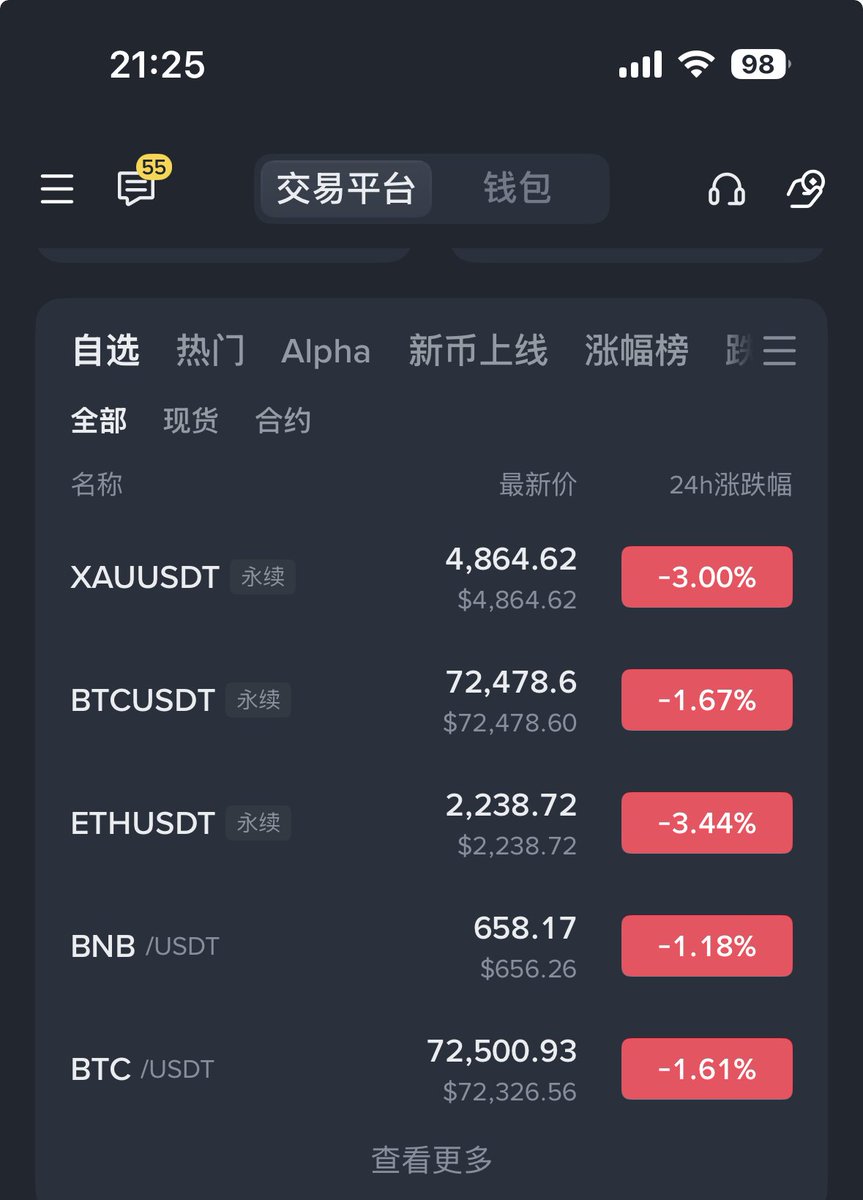
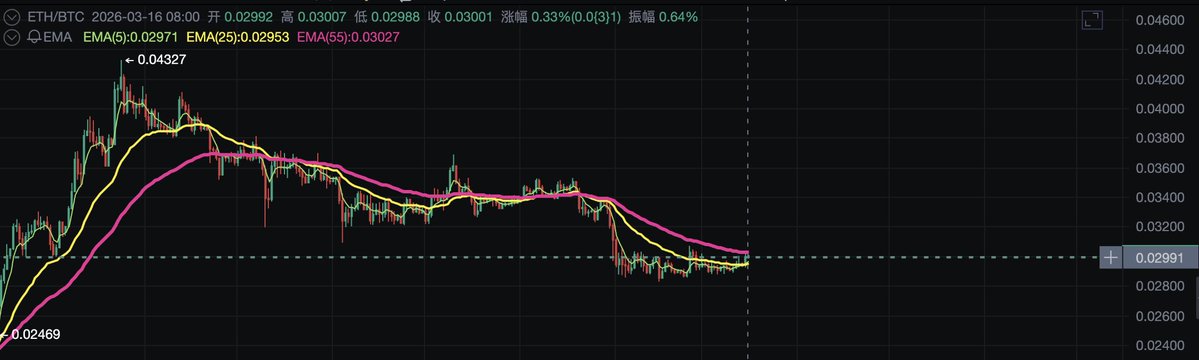
I recall that when I did my initial asset allocation, the logic was to use gold to hedge a portion of my cryptocurrency or USD asset portfolio against volatility. This was the logic behind the gold price surge and safe-haven appeal in January. The same principle applied to allocating to A-shares.
Recently, I've realized, haha, there's really no such thing as a true hedging asset; they're all basically moving in tandem. Financial markets everywhere price instability, just with different instruments.
If you don't research sectors in the A-share market, and only buy broad-based ETFs like the CSI 500 ETF, you're basically just continuing the market's upward trend. They might even react a day later. There's no hedging involved.
Only cash truly hedges your portfolio.

Price Converter

- Crypto
- Fiat

USDUnited States Dollar


CNYChinese Yuan

JPYJapanese Yen

HKDHong Kong Dollar

THBThai Baht

GBPBritish Pound

EUREuro

AUDAustralian Dollar

TWDNew Taiwan Dollar

KRWSouth Korean Won

PHPPhilippine Peso

AEDUAE Dirham

CADCanadian Dollar

MYRMalaysian Ringgit

MOPMacanese Pataca

NZDNew Zealand Dollar

CHFSwiss Franc

CZKCzech Koruna

DKKDanish Krone

IDRIndonesian Rupiah

LKRSri Lankan Rupee

NOKNorwegian Krone

QARQatari Riyal

RUBRussian Ruble

SGDSingapore Dollar

SEKSwedish Krona

VNDVietnamese Dong

ZARSouth African Rand
No more data