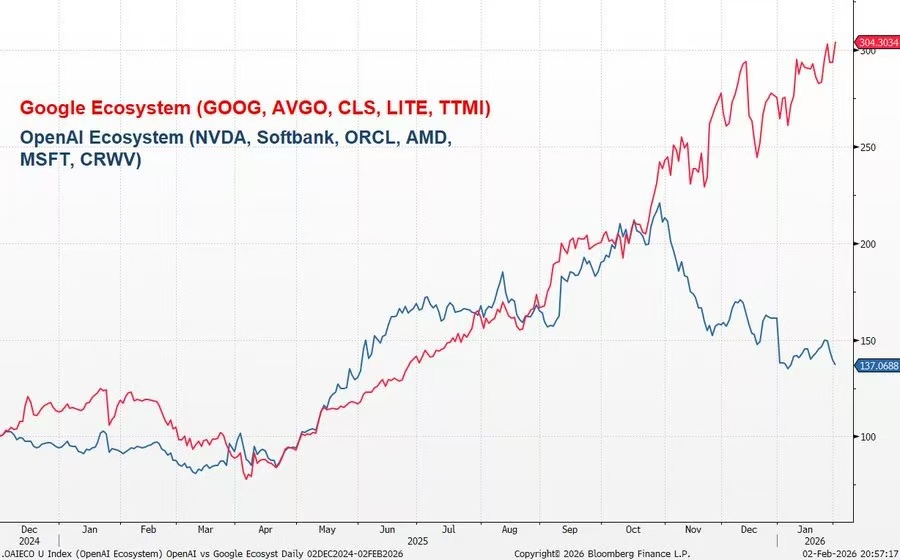
Both OpenAI and NVDA have reached a point where strategic decisions are needed. The root cause is that NVDA has taken the majority of the FCF (Full Flow Computing) in the entire chain (until 2027), forcing others to fight for survival. From a developmental perspective, they should invest in OpenAI as soon as possible to secure their place in the AI race.
Secondly, the entire top AI lab likely only has about 50 talented people? The entire market has been divided up by three companies (Open, Google, and Anthropic). What's even more alarming is that these three can be seen as talents cultivated by Google over the past decade, more familiar with Google's system and style. Therefore, if NVDA wants to gain an early advantage, it can only bet on Open, which has spun off from Google, and I feel it requires a massive investment of hundreds of billions.
A major difference between AI and the internet lies in the transmission cycle. From research papers to lab results, to certain application demonstrations, to the factory floor, to the supply chain, to performance, it basically takes about two years. Greg Brockman of OpenAI once said that they desperately wanted to change computing power, architecture, and chip design early on, but no one listened. They were too weak, and changing the entire design and supply chain was too difficult. This led to a slowdown in knowledge transfer. Therefore, to maintain their competitive advantage, they can only start from the very beginning, like acquiring Groq, directly locking in the inference SRAM.
So, the opportunity for $AMD$ and $INTC has arrived because the demand is huge.