Day three of my "ambient programming" experiment.
It started almost by accident. I wrote some game scripts and wondered what it would be like to turn them into playable games.
Day one was mainly about learning the workflow.
I made a super simple Plants vs. Zombies game. Once the graphics were done, all that was left was adjusting the numbers: difficulty, zombie speed, spawn rate, etc. The feedback loop was fast. In less than 30 minutes, you could feel what was working.
Day two was a mistake.
Before the core gameplay was even finalized, I started turning the scripts into a game. I started writing text directly. The game had a basic user interface, characters, some interactions, and some storyline. Then more ideas started flowing. I kept adding things: a shop system, a character corruption system, some branching storylines. Eight hours later, the game became bloated and boring.
It wasn't fun at all.
Day three. Today, I suddenly had an epiphany.
I woke up with a sudden clarity of mind. What if the entire game was built around an extremely simple mechanism, like swiping left and right? At the same time, I realized I had been letting the AI write too much in places it shouldn't have, especially text, so I drastically limited its functionality, allowing it only to generate code.
More importantly, I realized I had to start with the system itself. Co-creating a game with AI is essentially about the system: how many systems there are, how they are separated, and the structure of the files. Once everything is put into one file, the project inevitably falls into chaos.
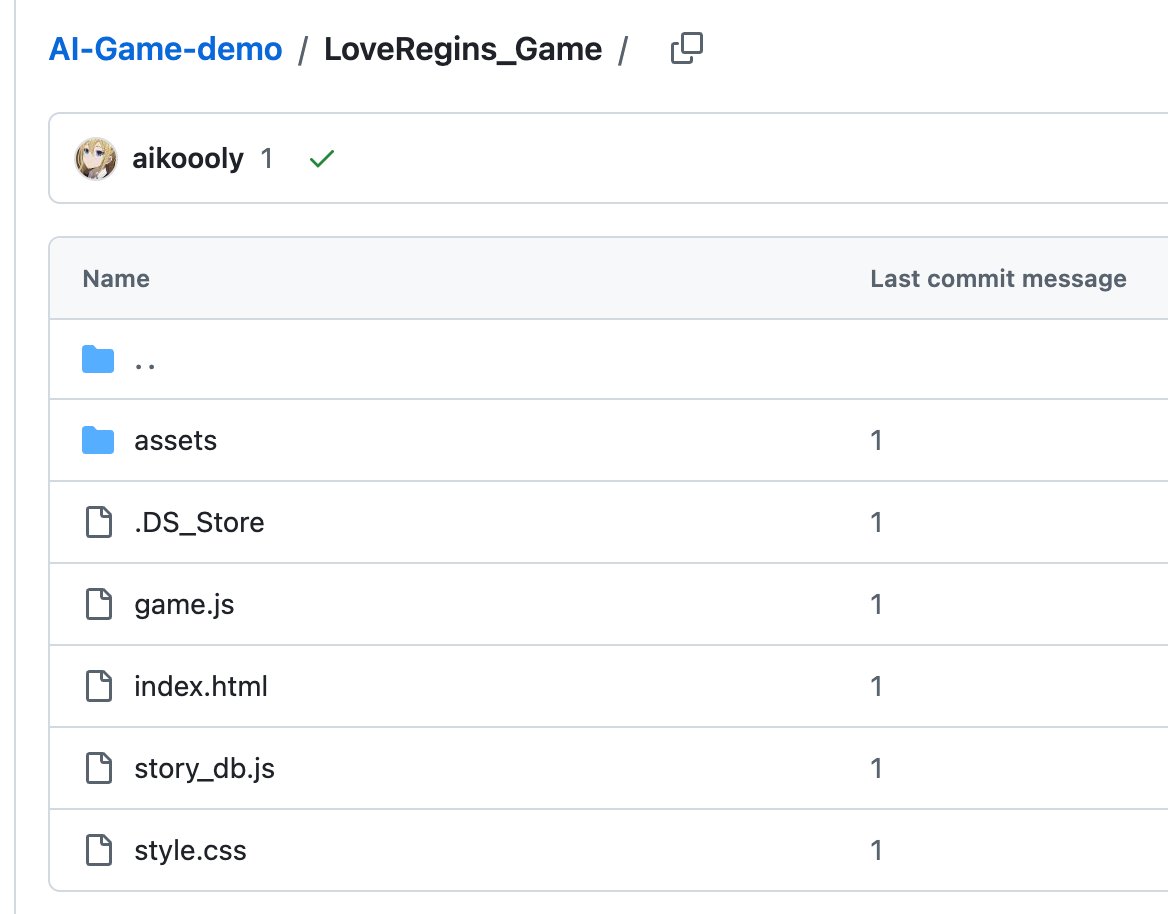
So I started from scratch, breaking the game down into four documents: 1) game logic, 2) story logic, 3) user interface, and 4) a single file that integrates everything. Because this structure stemmed from my own mindset, I was finally able to understand the code from beginning to end. When the AI generated non-existent names or definitions, I could spot them immediately, and debugging became much faster and more precise. For the first time, I felt truly in control, no longer being led by the nose by the AI model.
Furthermore, I found this approach incredibly practical. Combining large language models like Gemini or GPT with agent-based IDEs like Cursor yielded surprisingly good results. I usually start by having the model generate rough code and make initial attempts at system-level grouping. Then I rely on Cursor and Codex to fix errors and correctly piece the files together.
This way, you get the speed and convenience of large models while leveraging Codex's more robust logic for security.
Over the next few days, I plan to refine the events, endings, and visual style, making it a fast-paced piece.