





















作者:Wall Street CN
In 2020, the young Hamza Lemssouguer received an offer from hedge fund giant Ken Griffin, founder of Citadel, to manage a multi-billion dollar European credit fund. He declined.
Now, this 35-year-old Moroccan-born fund manager has started his own firm, building Arini Capital into a credit hedge fund with over $20 billion in assets under management. According to data provider Hedge Fund Research, its growth rate since its inception ranks first among emerging hedge fund managers.
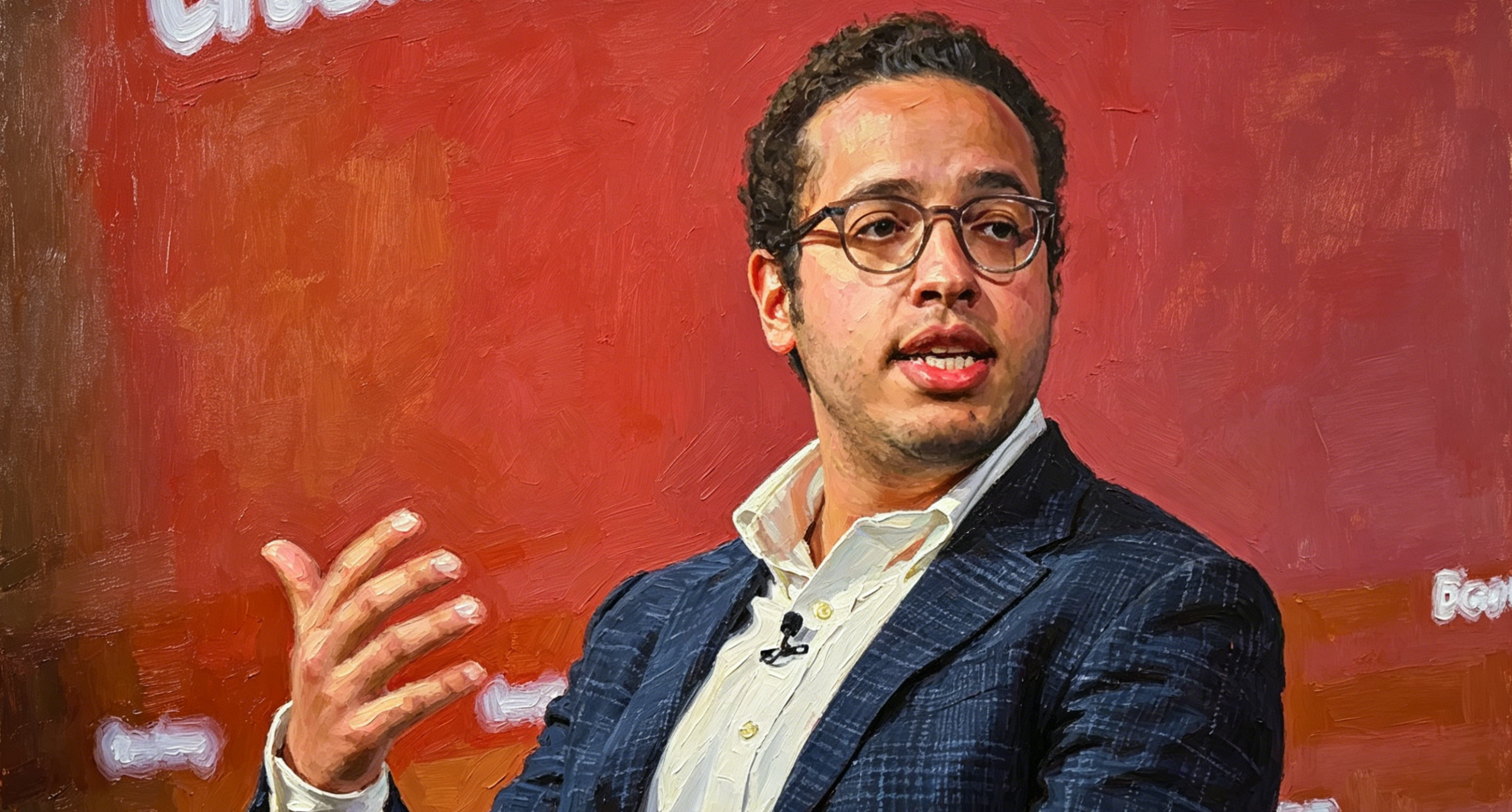
Lemssouguer's short-selling bets have repeatedly been successful, earning him both admiration and fear within the industry.
His short positions in software companies like ZipRecruiter and Unisys, which he established in the third quarter of 2025, initially failed to materialize, but were subsequently liquidated as the "SaaS doomsday" fears swept through the debt market. According to sources familiar with the matter,Arini's main fund has an average annual return of approximately 15%, which is more than double the average of 7% for the HFR Credit Hedge Fund Index.
However, Lemssouguer's aggressive style has also earned him many enemies. Competitors and bank traders criticize his over-reliance on leverage, which has led to significant performance volatility—his main fund once experienced a monthly drop of 6%, and its full-year return in 2024 was only 9%, partly due to his continued shorting during most market uptrends. "He has a lot of 'haters'," said Rupak Ghose, an investment banker who previously advised hedge funds and is now a financial industry commentator.
"Look at our track record; regardless of market fluctuations, we consistently achieve excess returns thanks to our robust risk management," said Lemssouguer in an interview at his 400-year-old Tudor estate outside London, where he lives with his wife, children, and 160 rare parrots. These fund managers—who neither drink nor drive and whose greatest passion is raising parrots—are writing their own legend in the City of London with an unconventional approach.
From Casablanca to Elite Universities: The Growth Trajectory of an Outlier
Lemssouguer was born into an ordinary family in Casablanca, Morocco. His father worked at the port, his mother was a teacher, and he had three siblings.
He was quiet and reserved from a young age, excelling in three things: painting, raising parrots, and mathematics. His mathematical talent opened the doors to École Polytechnique, one of France's top elite universities—considered a combination of the French MIT and West Point.
In 2014, Lemssouguer joined Credit Suisse's London office, taking the first step in his career.
He mastered American English by repeatedly watching American TV shows such as "Entourage" and "The Fresh Prince of Bel-Air".
With his outstanding bond trading skills, he quickly rose to become one of Credit Suisse's top traders, managing approximately $100 million in proprietary funds by 2016.
Jaguar Land Rover's bet: laying the foundation for its contrarian trading style
In 2016, the battle that truly established Lemssouguer's personal style followed.
At the time, Jaguar Land Rover's revenue was rising, and the market generally expected its credit rating to be upgraded. After visiting several dealerships, Lemssouguer found that inventory was piling up, indicating that sales were about to slow down. "I took the contrarian approach," he said.
He bet about 10% of his portfolio on credit default swaps (CDS), which would appreciate in value once bond investors turned bearish on the automaker.
In 2017, Jaguar Land Rover's sales figures indeed declined, and this transaction generated approximately a five-fold return for Credit Suisse. Since then, Lemssouguer has developed a consistent trading pattern: in-depth data analysis, forming high-confidence judgments, and maximizing position size.
Whenever he achieved a major victory, he would play music by his favorite rapper, The Notorious B.I.G., on the trading floor to celebrate.
A former colleague recalled, "When I heard about Hamza's performance in his first year, I thought, 'Whatever, anyone can get lucky once.' Then he continued to succeed in his second year, and I thought, 'He'll definitely lose everything next year'—but he never lost money."
He rose to fame after his COVID-19 experience, and subsequently turned down an offer from Griffin.
In early 2020, as the COVID-19 pandemic spread, Lemssouguer launched a short-selling offensive totaling approximately $1 billion against cash-strapped companies, including car rental company Europcar Mobility Group.
In the first quarter of 2020, this strategy generated approximately $220 million in profit.
It was in this same year that Citadel extended an olive branch to him, inviting him to take charge of a European credit fund.
Lemssouguer initially accepted, but later reneged—Credit Suisse offered to keep him on the condition that he help them set up an independent fund and take his existing trading team with him.
However, just before the plan was set to launch in early 2021, Credit Suisse's hedge fund business suddenly collapsed, forcing him to seek other backers, eventually securing support from the large hedge fund Squarepoint Capital.
Arini's meteoric rise: Assets under management surge more than 15 times in two years
Arini Capital was officially established in early 2022 with a starting capital of $1.3 billion. It focuses on highly indebted companies, providing loans to some companies and buying or shorting the bonds of others, often with heavy investment.
However, the start was not smooth: the Russia-Ukraine war broke out, global interest rates rose rapidly, European corporate bond prices fell across the board, and the fund lost 15% from March to September of that year. Lemssouguer later admitted that the biggest mistake was not having a dedicated risk hedging trader at the beginning.
Nevertheless, Arini ultimately finished the year with a positive return of 4%.
Subsequently, Lemssouguer brought in Ardacan Celebi, a trader from Deutsche Bank—also a graduate of a prestigious French mathematics university. Celebi built what Arini internally called a "risk mitigation engine," which comprehensively utilized derivatives, bonds, ETFs, and other tools to absorb market shocks, enabling the fund to maintain an aggressive position during volatile market conditions.
"The biggest drawdown is what can force you out of the game," Celebi said.
Currently, the Arini team consists of analysts and traders from countries such as Afghanistan, Türkiye, and Ukraine working closely together.
After reaching $4 billion in size, the main fund closed to external investors, and the company is aggressively expanding its mortgage-backed securities (CLO) and private lending businesses—businesses with lower fees than hedge funds but greater potential for growth. Approximately 60% of its raised capital comes from North America.
Model Controversy: Can Centralized Collaboration Withstand Market Pressure?
In terms of operational architecture, Arini is quite different from multi-strategy platforms such as Citadel.
The latter has multiple independent teams competing with each other, while all of Arini's funds share the same research team of 20 industry analysts, ensuring unified information and collaborative judgment. Lemssouguer believes this model allows the company to capture investment opportunities more quickly.
However, critics point out potential risks: the holdings of various funds may therefore be highly correlated, and in the event of a market upheaval, the risks could erupt all at once. Furthermore, Arini's "risk mitigation engine" has yet to undergo a true test during a prolonged market downturn.
Despite facing criticism from all sides, Lemssouguer maintained his consistent anti-traditional stance.
"Being young, and being an outsider and a nonconformist, prevents me from becoming arrogant towards the market," he said.



No Comments