



















Author:AInvest
The Regulatory Tightrope: FSC vs. BOK
The FSC has taken a pro-innovation stance,
that would allow tech giants like Naver and Kakao to issue won-pegged stablecoins. This aligns with President Lee Jae-myung's vision of positioning South Korea as a global fintech leader. However, the BOK has resisted, (at least 51%) in stablecoin issuers to mitigate risks like depegging and capital outflows. This divide has delayed a unified regulatory framework, leaving the market in limbo.In September 2025,
on stablecoin-backed lending and banned leveraged practices, limiting lending to the top 20 tokens by market cap or those listed on three won-based exchanges. These measures aim to protect retail investors but have stifled liquidity for platforms reliant on high-yield lending. Meanwhile, could stifle innovation, as non-bank entities-often more agile-drive much of the sector's growth.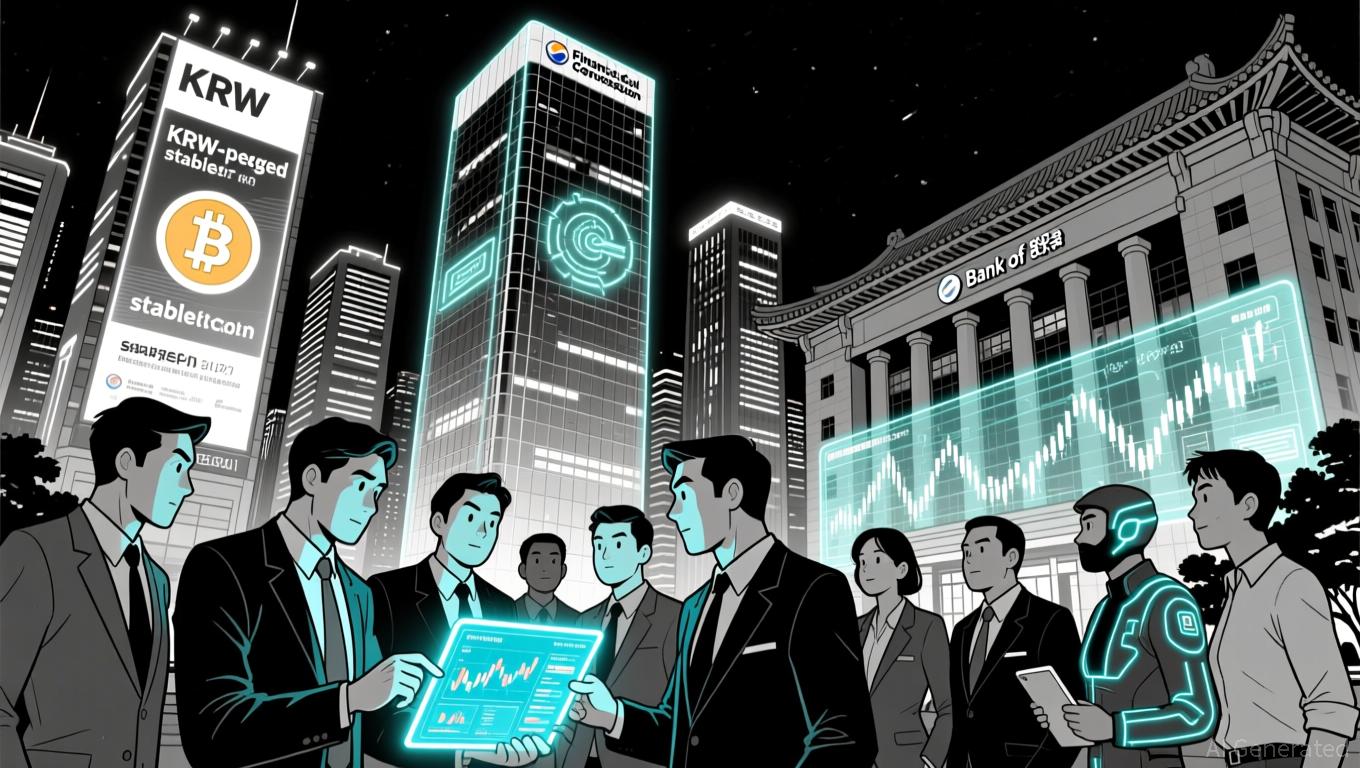
Case Studies: Upbit, Bithumb, and the Cost of Compliance
South Korea's largest exchanges, Upbit and Bithumb, have faced operational upheaval. In November 2025,
for violating KYC/AML protocols under the Special Financial Transactions Act. The Financial Intelligence Unit (FIU) has intensified on-site inspections, with . These fines reflect a broader regulatory crackdown, forcing platforms to divert resources to compliance rather than innovation.The FSC's
in Q3 2025 further compounded challenges. Platforms like Upbit and Bithumb had launched lending products with significant adoption, but the suspension left users exposed to liquidity risks. For example, to form a $13.8 billion fintech group now faces regulatory hurdles, as domestic compliance costs eat into expansion budgets.Investor Sentiment: From to Caution
has plummeted to near zero in 2025, signaling a bearish shift. This reflects investor wariness amid regulatory uncertainty. of 2023 and of June 2025 have introduced stricter reserve requirements and licensing mandates, raising operational costs for platforms. While these reforms aim to legitimize crypto as an asset class, they have also driven defensive trading behavior, with and strong issuer reputations.However,
. The FSC's push for a licensing regime has spurred collaboration between banks and fintechs on KRW-pegged stablecoins. If finalized, this could position South Korea as a hub for cross-border settlements and DeFi innovation, particularly if .Risks and Opportunities in a Shifting Landscape
Risks:
- Regulatory Delays: The absence of a finalized framework creates operational uncertainty, deterring long-term investment.
- Compliance Costs: Smaller platforms may struggle to meet reserve and licensing requirements, consolidating the market in favor of well-capitalized players.
- BOK Dominance: A bank-led stablecoin ecosystem could stifle innovation, limiting competition from agile fintechs and DeFi protocols.
Opportunities:
- Institutional Adoption: A clear regulatory framework could attract global investors, particularly if South Korea's stablecoins gain traction in cross-border payments.
- Tech-Driven Innovation:
- Global Leadership: South Korea's proactive stance on digital assets positions it to influence global standards, potentially rivaling the U.S. and EU in crypto governance.
Conclusion: Navigating the Storm
South Korea's stablecoin-backed lending sector is a microcosm of the broader crypto industry's struggle between innovation and regulation. For investors, the key lies in balancing short-term risks-like compliance costs and regulatory delays-with long-term opportunities in a market poised for institutionalization. While the FSC and BOK's tug-of-war continues, platforms that adapt to stricter oversight while leveraging their technological edge may emerge as winners.
As the FSC's proposed licensing regime moves toward implementation in 2026, the coming months will test whether South Korea can harmonize its regulatory ambitions with the dynamic needs of a rapidly evolving market. For now, the path forward remains as volatile as the assets it seeks to govern.

No Comments