



















Author:AInvest
The MERL Upgrade: A Blueprint for Bitcoin-Native Scalability
Merlin Chain's November 2025 network upgrade, supported by Bithumb and Bybit, exemplifies how temporary suspensions can align with ambitious technical goals. By integrating Zero-Knowledge (ZK) rollups and anchoring proofs to Bitcoin's base layer, the upgrade aimed to address Bitcoin's inherent scalability limitations while enhancing transaction throughput by up to 60 times, according to a
. Bithumb's suspension of MERL deposits and withdrawals during this period was a necessary trade-off to ensure seamless implementation of these improvements.The short-term impact was mixed: MERL's price dropped 21.41% over 24 hours amid the suspension, according to a
, reflecting market uncertainty. However, the upgrade's long-term implications are bullish. By reducing finality times and optimizing gas fees for Bitcoin-native protocols like BRC-20, Merlin Chain positions itself as a critical Layer-2 solution for Bitcoin's DeFi ecosystem, according to a . Institutional endorsements from exchanges like Bybit further validate the project's trajectory, suggesting that MERL's strategic value lies in its ability to bridge Bitcoin's security with scalable, low-cost transactions.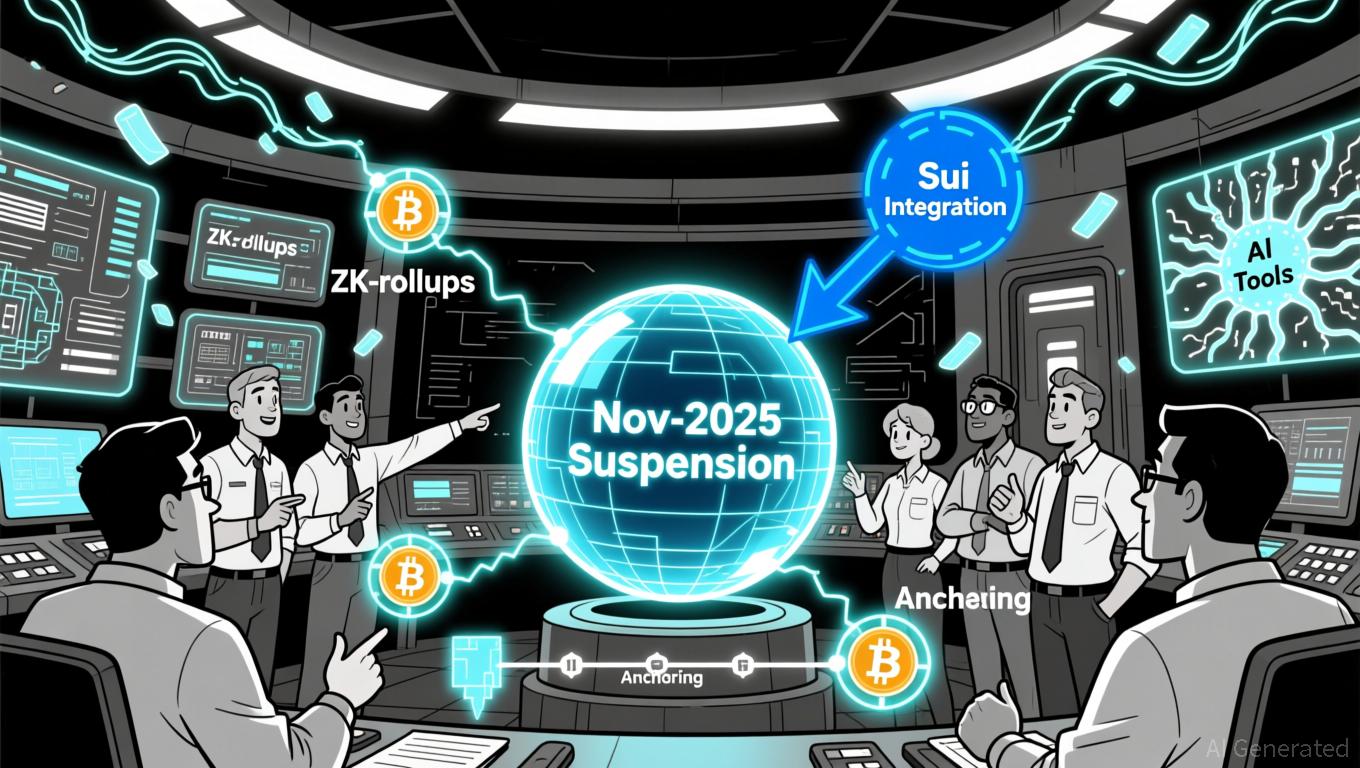
BERA's Hard Fork: Balancing Security and Liquidity
Berachain's recent hard fork, supported by Upbit and BloFin, underscores the tension between security and liquidity. The suspension of BERA deposits and withdrawals was a standard precaution to implement critical protocol changes, including enhanced security measures and bug fixes, according to a
. While this created short-term liquidity constraints, the upgrade's focus on faster transaction speeds and lower fees aligns with DeFi's demand for efficient, secure smart contract platforms.For BERA holders, the absence of immediate action requirements during the suspension minimized panic selling, preserving portfolio stability, according to a
. The upgrade's long-term benefits-such as stronger defenses against threats and the ability to handle higher transaction volumes-position BERA as a competitive alternative to Ethereum-based chains. However, the lack of price surges post-upgrade (unlike MERL's 20.53% jump in July 2025) suggests that market confidence in BERA's execution remains cautious.XEC's Infrastructure Overhaul: A Test of Resilience
eCash's network upgrades in late October and November 2025, including a 2–4 hour suspension on Upbit, highlight the challenges of balancing technical progress with market sentiment. While the ecash-wallet TypeScript library and Avalanche Pre-Consensus project aim to streamline transactions and enable instant finality, according to a
, XEC's price has struggled with bearish patterns, including a descending triangle breakdown, according to a .The suspension's impact on trading volume was mitigated by the continued availability of XEC pairs for trading, according to a
, but the broader market's bearish outlook suggests that infrastructure improvements alone may not be enough to attract retail investors. Long-term holder returns remain uncertain, as the token's utility in NFTs and cross-chain applications is still in its infancy compared to established Layer-2 solutions like MERL.Strategic Value: Short-Term Pain, Long-Term Gain
Across all three tokens, the strategic value of temporary suspensions lies in their ability to signal institutional-grade infrastructure improvements. For MERL, the integration of ZK-rollups and
anchoring creates a defensible moat in the Bitcoin Layer-2 space. For BERA, the hard fork's focus on security and scalability aligns with DeFi's evolving needs. For XEC, the upgrades aim to future-proof the network against competition but require stronger adoption to justify long-term holder returns.However, the market's mixed reactions-MERL's post-upgrade price dip, BERA's muted response, and XEC's bearish technical indicators-highlight the importance of execution. Holders must weigh the immediate liquidity costs against the potential for these upgrades to attract developers, institutional partners, and users in the long term.
Conclusion
Network upgrades are not just technical exercises; they are strategic investments in a project's future. While temporary suspensions may test patience, they are often necessary to implement the foundational improvements that drive long-term value. For XEC, BERA, and MERL holders, the key is to monitor how these upgrades translate into real-world adoption, developer activity, and institutional partnerships. In a market where infrastructure defines success, the willingness to endure short-term disruptions could be the difference between a token that survives and one that thrives.




No Comments